Local-global: blueprint for green print

Designing a Learning for sustainability workshop for Ceres and UAL students (module for MA in Academic Practice)

Strolling edge-boundaries of research into printed textiles sustainability. Discovering and acknowledging existing paths that intersect between problem and process.

Investigation of cultural identity, miles travelled by colour, appropriation of heritage patterns, or preservation of the craft. The field narrows, earth-horizon reached, honing to natural dye-print colours. A workshop that uses dyes as a vehicle to explore, discuss, and confront the complexity of sustainability in education. A workshop that assumes natural dyes are chosen over synthetic dyes because of design potential, availability, aesthetic beauty, or historical accuracy. The dichotomy of synthetic versus natural dye, a choice referenced but not focused on.

Observant of place-learning, the workshop invites students to explore their location; to forage, investigate dye gardens, or gather bio-waste To bring dye-plants to the workshop, and link learning to habitats. Colour palettes balanced by the suggestion of imported dyes alongside the indigenous and home produced. Personal concepts and perceptions of sustainability discussed and recorded onto hand-printed maps and digitally shared on Padlet.

Using the provenance of dye-plants to research colours within the context of sustainability. Knowledge of the origins of the dye enables students to study specific economic, social and environmental concerns. The collaborative making of colour-pastes in the workshop, printing of designs, visual documentation onto maps, and ensuing discussion embeds sustainability into practice.
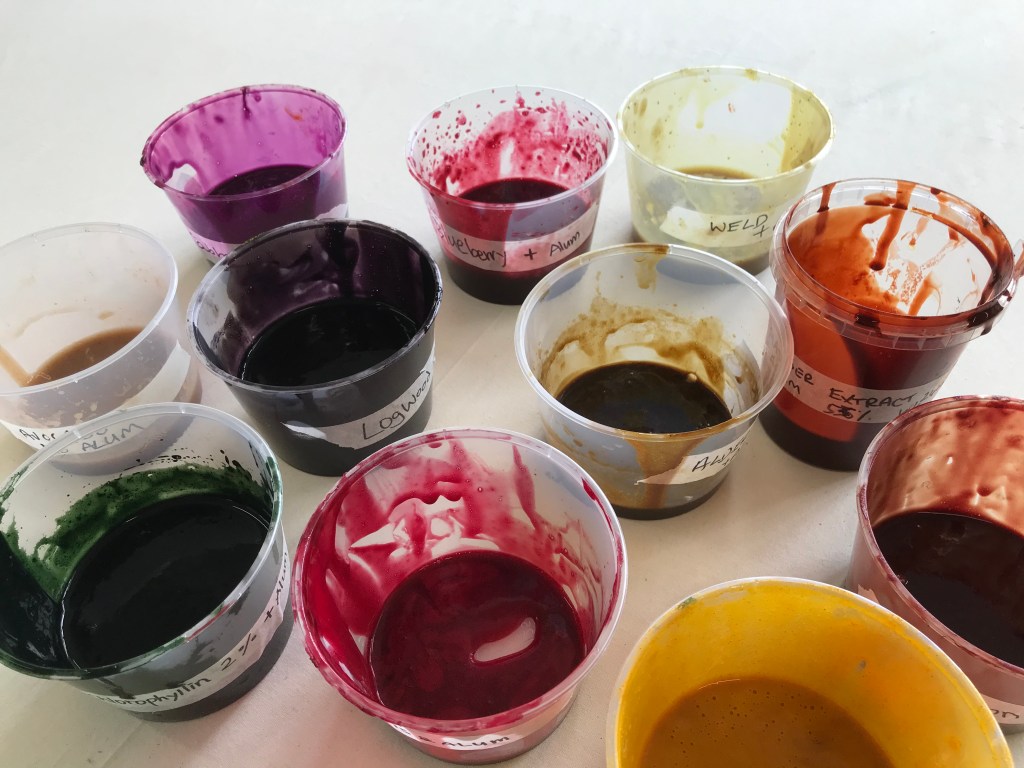
A plethora of dye-stuffs were introduced during the workshops:

Madder from Nature’s rainbow in Hertfordshire.

Red onion skins from the Cambridgeshire, via the Twickenham farmers market.

Saffron from Spain. 

Bio-waste colours; cleverly feeding the population, then releasing colour before composing.

Imported dyes; some companies were transparent about their origins, some less knowledgeable. I had hoped for a country, a region, a farm, or a single field. Instead I’m told Europe. Insufficient information to allow accurate judgement of human rights, water management, or land husbandry.

Ancient colonial colours; exploited skeletons of trafficked slaves.

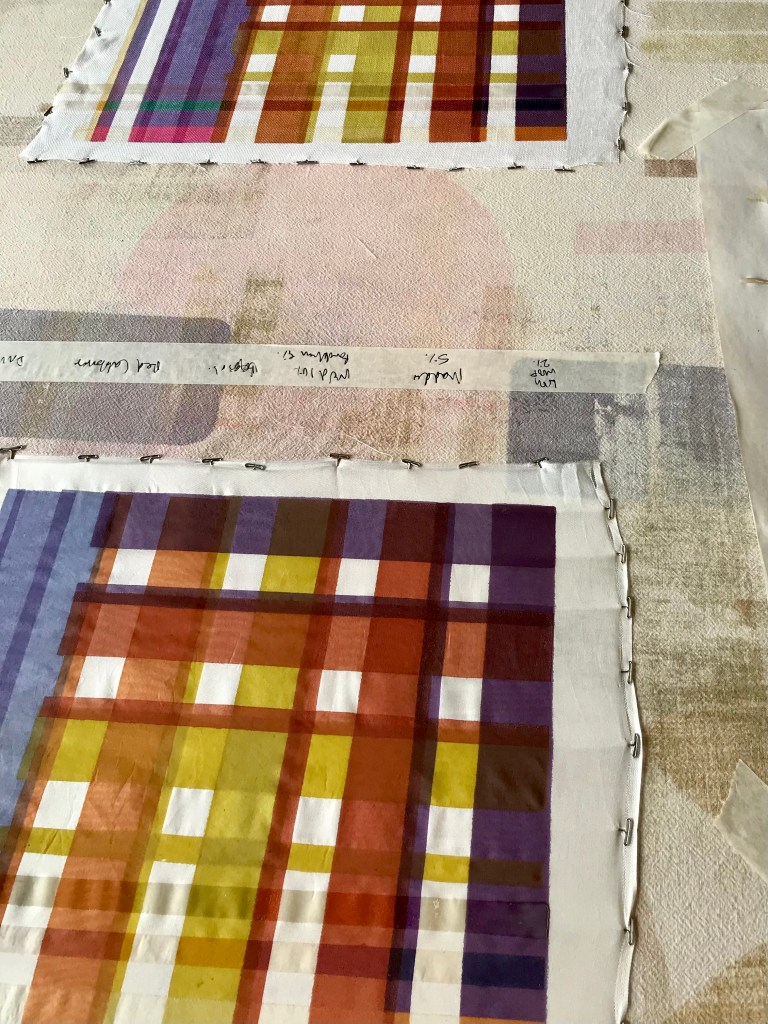
A workshop of collecting, fabricating, discussing, and reflection. Making informed influential  sustainable textile decisions. Printed maps, fabric samples, and digital interpretations are process snapshots, not scientific rationale. Work in flux. Setting sustainability horizons, but not boundaries. Participatory sharing of knowledge, creating a symbolic collaborative-cooperative-Commons product, that maps student’s sustainability thinking. Reach expanding.
Books and articles that particularly influenced this workshop were:

4 Plants of Bondage, Limbo Plants, and Liberation Flora: Diasporic Reflections for STS in Africa and Africa in STS by Geri Augusto.

Fibershed by Rebecca Burgess.

Wild Dress by Kate Fletcher.

Doughnut Economies by Kate Raworth.

Seeing with fresh eyes by Edward Tufte.

Madder mining

Mining madder

Colour-detectorists; searching for local dye plants.

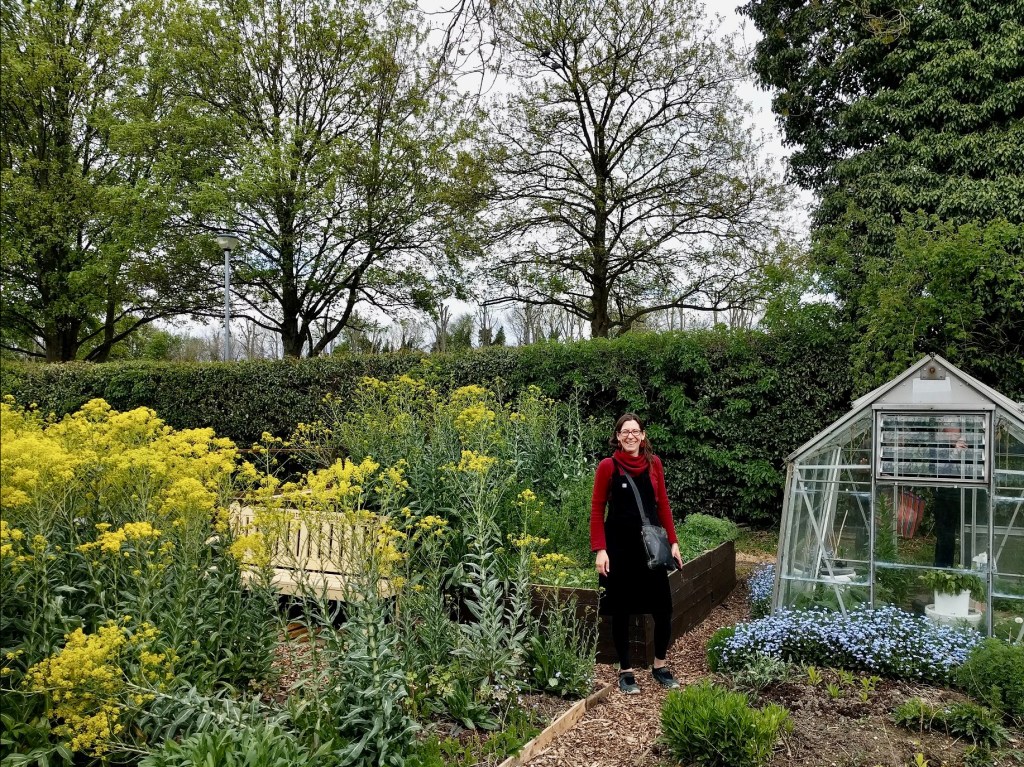
Half an hour from Kings Cross, deep-rural edging the Chilterns, we mined fire-red madder from the chalk rich earth. Legends of cow’s bones transformed crimson when fed on madder tops. We only want the roots; three years old and twisted repugnant realisations of Brothers Grimm tales.

grand teint, madder is omnipotent in natural-dye hierarchies; its colourfast properties validated and enshrined by 17th century French laws. Dyers madder (Rubia tinctorum) and Indian Madder (Rubia cordifolia) dominate this turkey-red, terracotta, scarlet and purple smorgasbord.

The red-rooted madder clan are illustrious and ingenious; some indigenous to the Uk and some shiveringly light-famished in the northern hemisphere. 

Dyers woodruff (Asperula tinctoria) lacy under the surface, yields a sharp clear red.

Wild madder (Rubia peregrina) coloniser of clifftops and rural West Country idylls.

Ladies bedstraw (Galium verum) roots a network of daintiness. Alleged saviour of the 17th and 18th century Hebridean machair, slowing coastal erosion and binding clifftops with its wiry root system. In a tempestuous climate emergency, we need local heroes.

Susan Dye (a name to die for) of Natures Rainbow, and her husband Ashley, are troves of information. Flo and Lara, in awe of the detailed plant knowledge and intrigued by a rare sighting of the sun, listened to their tales. Rare experimental colours:

Devils-bit-scabious – promises indigo, but renegades on delivery.

Elecampane  – Scottish myths of vivid blue, tantalising but realised only in a useful grey.

Dyers sawort – purple flowers and yellow dye.

And, another grand teint, Weld its tiny seeds waiting meekly, then sneaky germinating in disturbed soil.

Mining of natural dyes, cracking open the earth by spade on an allotment devoted to dye plants. Bird-song, the smell of blossom and neighbourly lunch. Antithesis of coal mining and cracking crude oil used for synthetic dye production.

Colour squabble

Natural dyes  have unique personalities; quarrelsome, needy, mellow, extrovert. Screen-printing with them is to party with a diverse crowd of friends, clamouring for a change in the tempo of the dance music. 

Logwood

Machiavellian identity changer; rocks up in a leather jacket as mean-man, full of importance. Hangs out with Ferrous Sulphate, and trades his soul for longevity, spending hours on dark mischief making. Without Ferrous, he winds up snoring and grey in the corner as the sun rises (yep, he’s one of those dyes that fade)

Chlorophyllin

Festival aroma of crushed evening grass, wending a way back to the tent. Slinks around with Soda Ash, for heightened perception.

Madder

Complicated. Prevaricates about timing, years pass as the slow waltz is perfected in underground clubs. Dominating until the finale; wearing ugly brown cardigan, covering up the palest pink and fiery orange.  

Brazilwood

Jets in from Brazil’s coastal Atlantic Forest; rarefied, exotic, whiff of danger. An extrovert, lindy-hops to the wee-small hours in strappy slinky fuchsia dress. Partners Fustic for an orange delight twirl around the dancefloor.

Sappenwood impersonates and replicates, and is so much more available.

Weld

Timid until teamed up with an alkaline partner, and then WOW it’s an all night party. 

And then there’s the colour modifiers…