
Visit Ceres, and the other Fabric Floor studio’s on the 5th and 6th December. We will have fabric for communal printing, alongside pieces from our recent collaborations, and design projects, for sale or to view.
Tag: colours from plants
WSA Sustainable Luxury Textiles
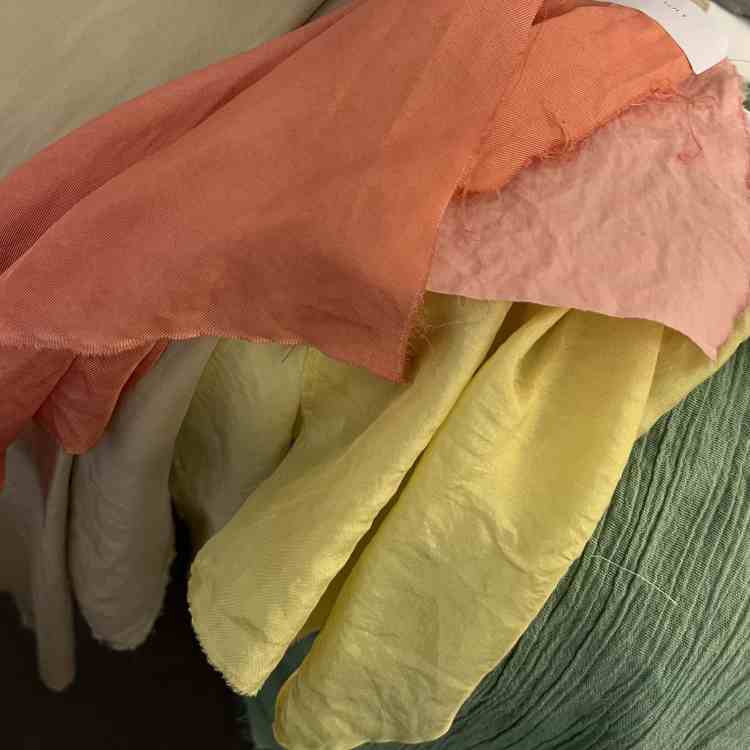
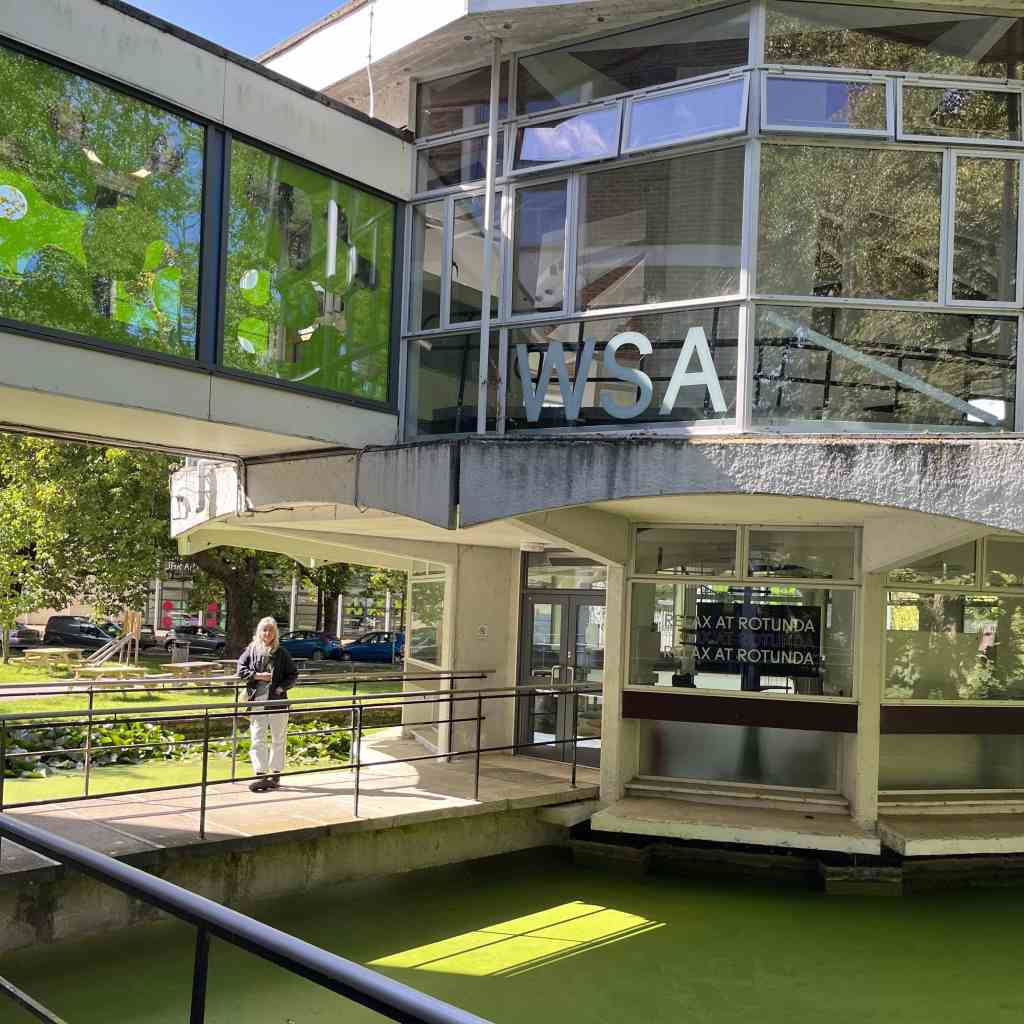

We were invited to Winchester School of Art to deliver bespoke training, advising on the set up of their sustainable natural dye-print labs. The BA Textiles department are taking the hugely exciting leap of transitioning from chemical to natural dyestuffs. We taught the staff how to forage for dye-plants (handily next to a park, and water meadows), and then how to make natural dyes into coloured vats and print-pastes. We developed techniques for them to use when teaching their new cohort of students; testing new plant colours, designing with natural dyes, and exploring warp and weave dyeing process.
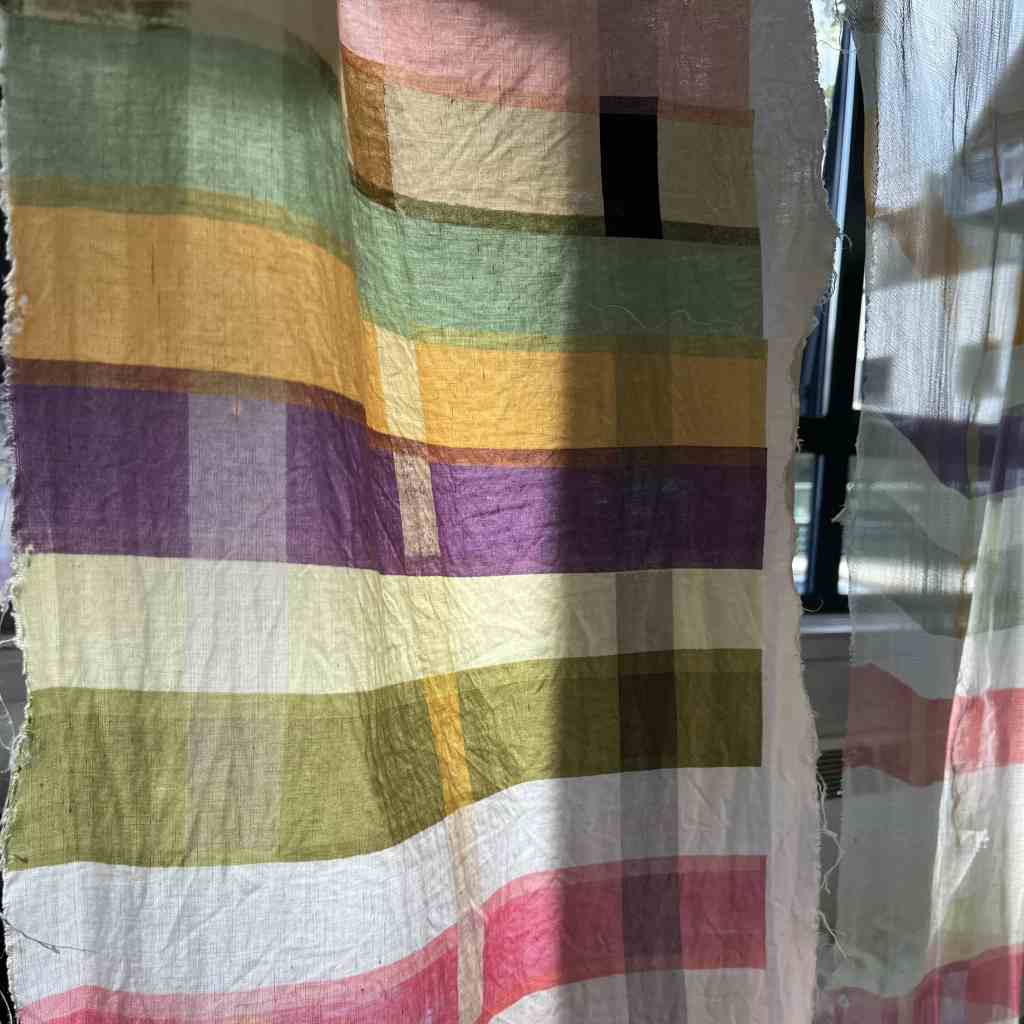
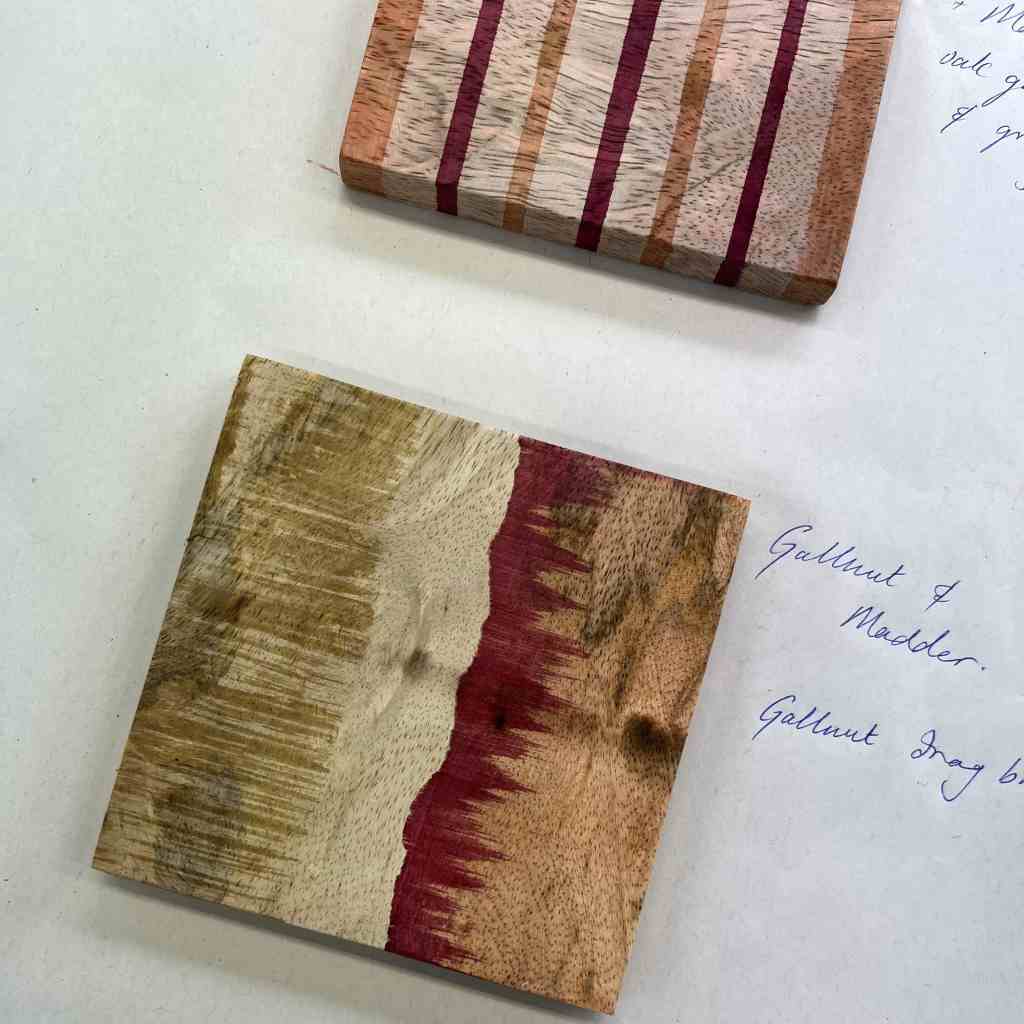
An inventive and immersive 3-days; collecting plants for experimential colour making, printing onto naturally dyed warps with modifiers, and playfully dyeing and painting onto wood.


Armenian narrative. 3.
Second week. We are excited by blue made from purple aubergines peel. With the students we discuss designing a collaborative silk (avocado dip) square, complemented by individual stripes of the super-springy wool (pomegranate dip?)
Evening was magical-intensity, swimming in a turquoise-mosaic pool, soaring above the city, with a thunderstorm reigning the sky. TUMO’s summer party was at a house perched atop the Cascades. Hidden, accessed via tiny lanes, in a harried taxi. The Armenian style house, opened onto a terrace, where we ate gazpacho and traditional dishes. The pool enticing-beckoning in the pre-storm swelter. The hostess conjured up towels and the most stylish of black swim cossies (because who brings bathers to a dinner party). Succulent and wooed by the splendour we swam until rain-lashed lightning drove us from the water. We left the party via a tiny iron staircase, into the wet-shiny marble Cascades darkness. That night I dreamt of a wedding 25 years ago, in an ancient Italian villa, swimming, and dining with friends. Yerevan is elegant, charming, and hospitable.

Morning, and to the museum of Martiros Saryan, Armenians favourite artist, and increasingly mine too. Coloured mountains, dancers, flowers; our Yerevan-TUMO colours pay homage to him. I brought a book of his costume sketches, similar to Leon Basque. Rivals?
Flo found Armenian mulberries in a park; intense, smaller than uk ones. Similar to those found in Cévennes, a traditional silk producing region of France. Flo notices more dye in the cityscape than I do, the too-fast-walker. Sonia, in a genius-move, suggested designing the collaborative scarf as a game of consequences; with five mini-sketches passed around the table. Voting concluded, and by evening we had hills around the edges, and an amorphous peace sign inserted into the pattern. Tomorrow brings the flowers.
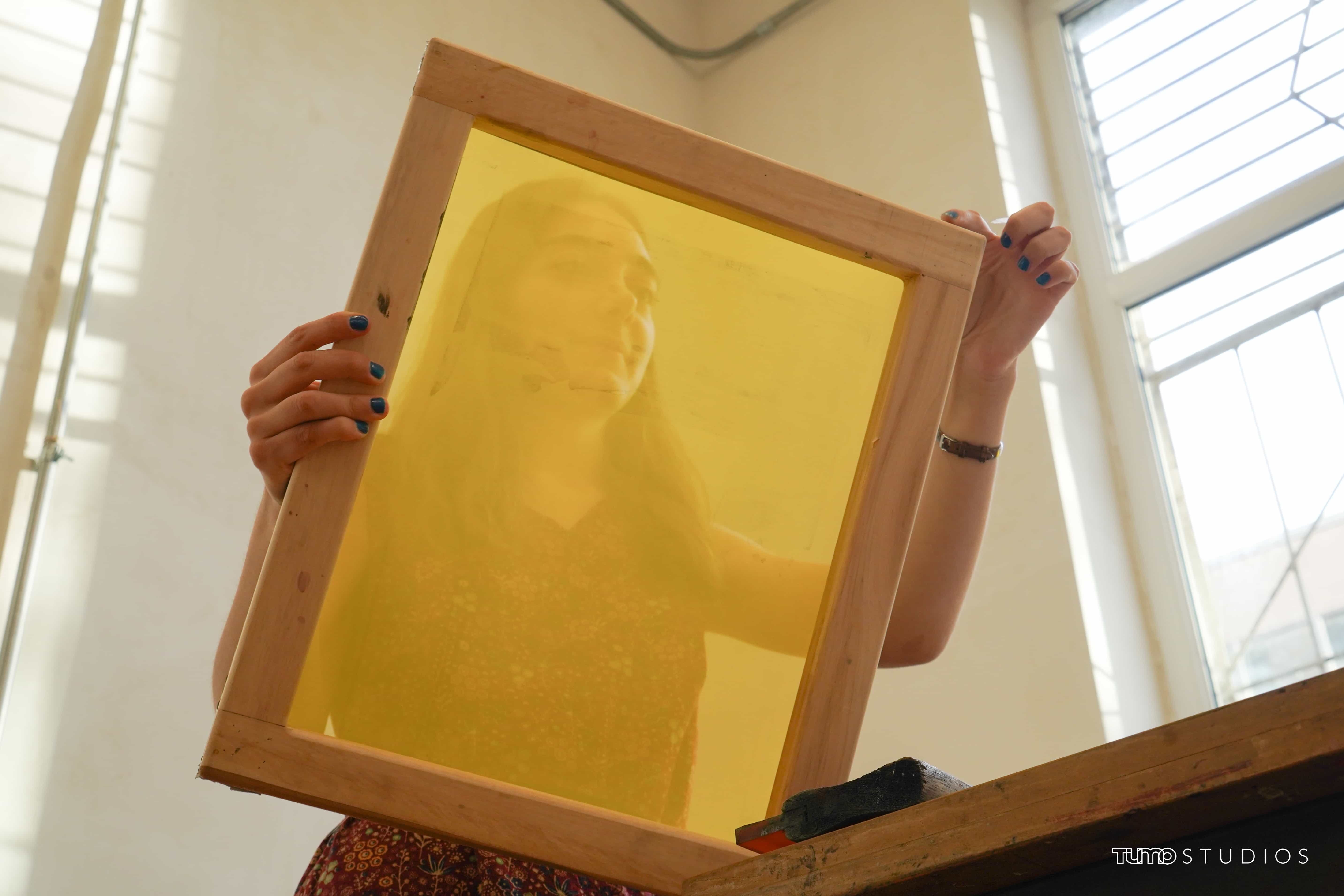
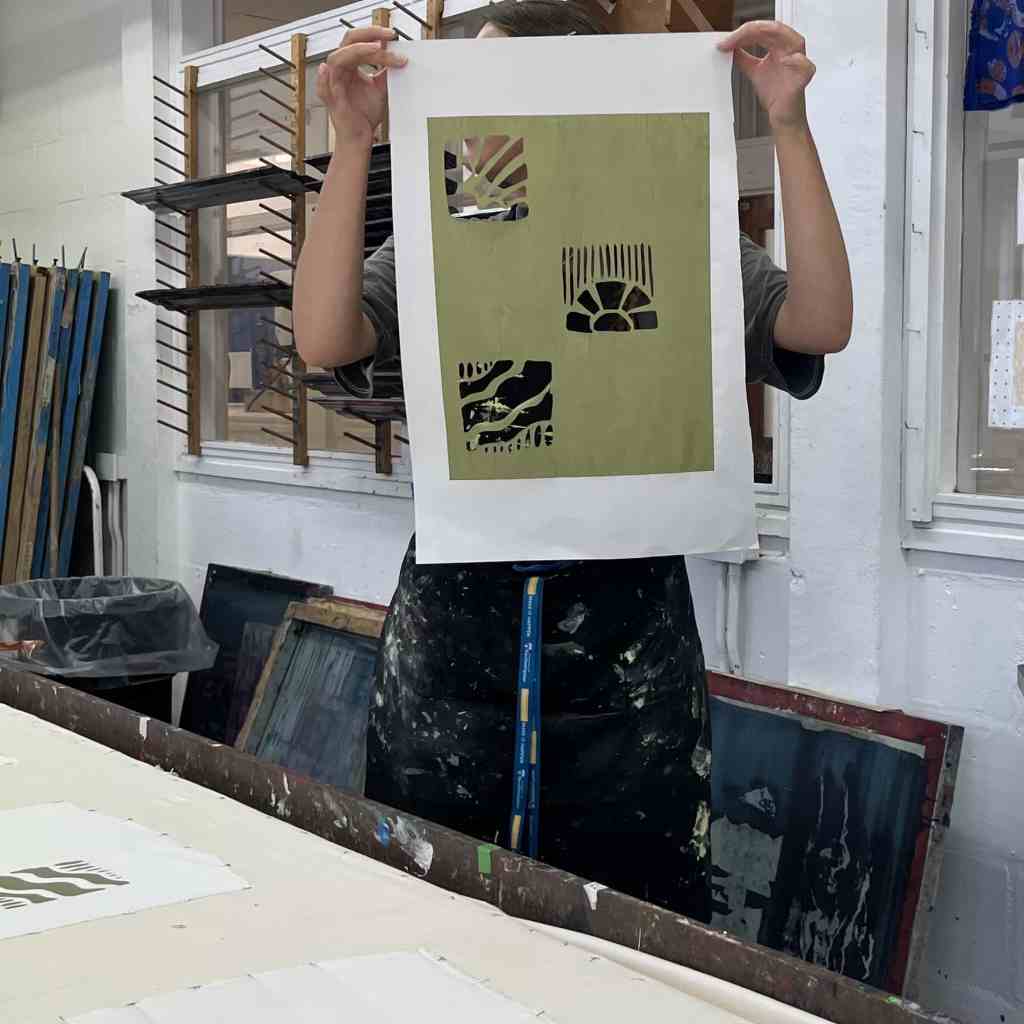
Days are sliding away from the two weeks that felt so long. Flo and I printed morning homages to the colours, artists and architecture of Armenia. Flo concentrates on the enticing shadows falling through the yellow blinds, I interpret Saryan’s landscape.
The students finished the silk with a snaking iron-aubergine print; a dance of print action captured by Mariam. We steam the silk, revealing just how far the students have progressed this week. The steamer is a low-tech miracle; we are experts in turning basic equipment into a print lab. Still blessing the metal screens and squeegees that we squeezed into our cases from London.

The hot-hot gg took us through the heavily congested city, no seatbelts, driver on the gas. We had a meeting with Hayk Oltaci, president and founder of Woolway. A rambling workshop for naturally dyeing heritage carpets and tapestries. Huge vats of mordanting yarns, and large dusty bowls of local madder root. Dorothy and Flo brought woven blankets made of new wool; the Armenia word for scratchy translates as “bitten by the yarn”. Hayk made us Lemonade, and told us his story. Armenian heritage, born in Istanbul, and recently reloacated his business to Yerevan after living in New York for 30 years.

Last studio day, and exhibition day! We are excited by the students achievements, hoping for a return invite, to this cultured, generous place.

Secret dye garden: National Theatre
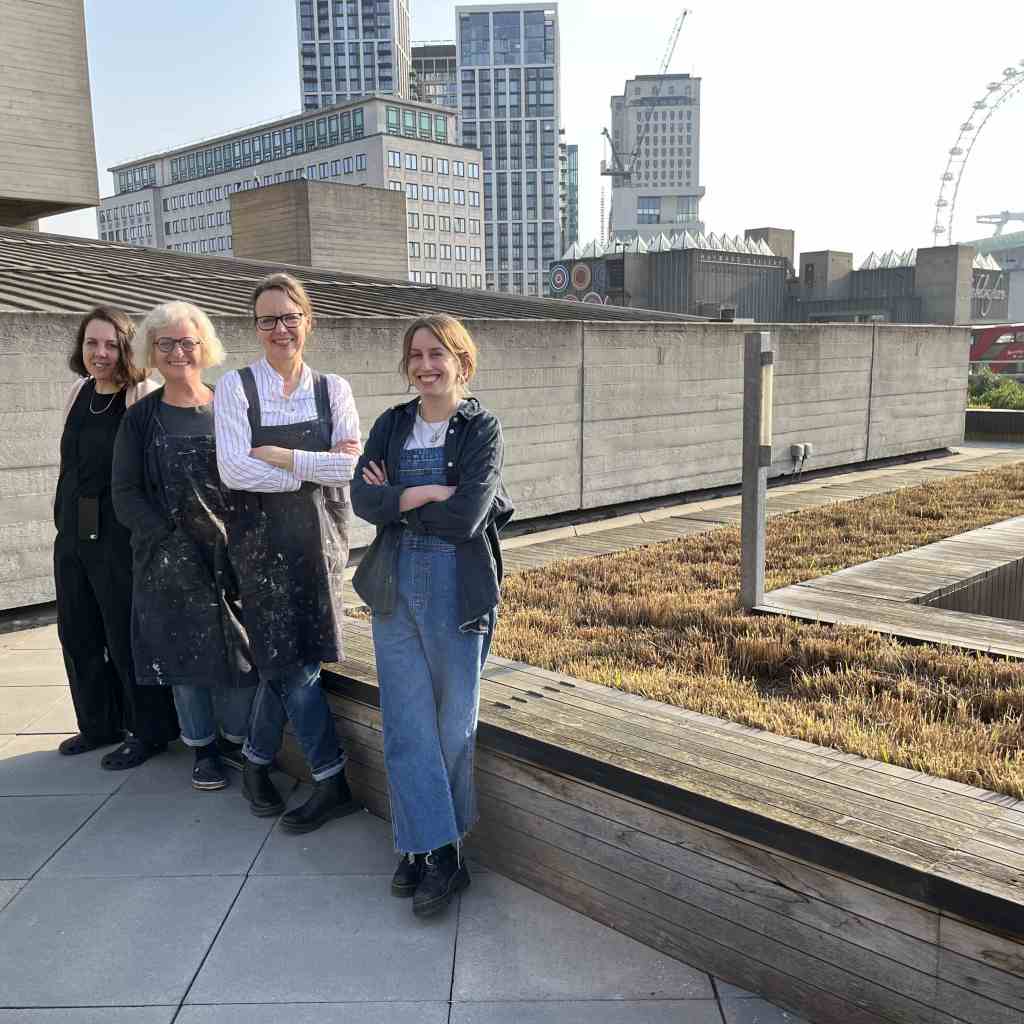
By the River Thames, behind the scenes at the National Theatre, we met with the printers and dyers of the costume workshop. Ceres spent the day teaching the team how to extract colours from plants, and print onto fabric with natural dyes.

The National Theatre are investing in planting a dye garden. On the balcony, overlooking the river, are the emerging shoots of it. We are looking forward to how their colours grow over the following seasons. It will be fascinating to see how this new way of working integrates with the production of the upcoming costumes from the design team.

Armenian narrative. 1.
Ceres were invited by TUMO, the Centre for creative technologies, to teach natural dye print in Yerevan, Armenia. The course focused on research and design, and culminated with an exhibition showing the students prototype scarves for the TUMO shop. We spent two weeks in this elegant and vibrant city.
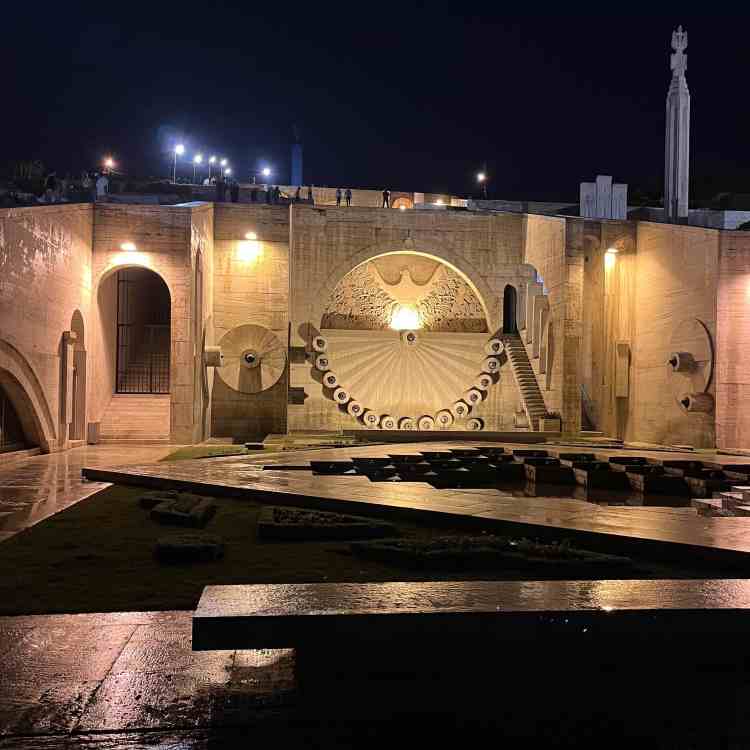
The plane’s descent was into a 4.00 am inkyness. Somnolent velvet-dark warmth, the Arrival’s hall perfumed by bouquets of flowers; greetings Armenian style. Yerevan has trapped itself a heatwave. Ravenous, we find the fridge abundant with berries, peaches, and cherries; already we love our flat mate Doretee. The fruit is juicy and sweet and aromatic.

TUMO is in an ornate 1910 building. The shop/gallery is on the ground floor, the interior has high ceilings, a grand-messed-up vibe, and a terrazzo staircase. Curious original features of Art-deco double fronted tiled fireplaces, hint of cold winters. Our studio was hot-like a furnace, with a promise of air-conditioning soon. Afternoon light made complex shadows on the yellow blinds. Flo and I adeptly create a print studio from the tables and work benches; finding solutions that enable our five students to make and design with natural print pastes.

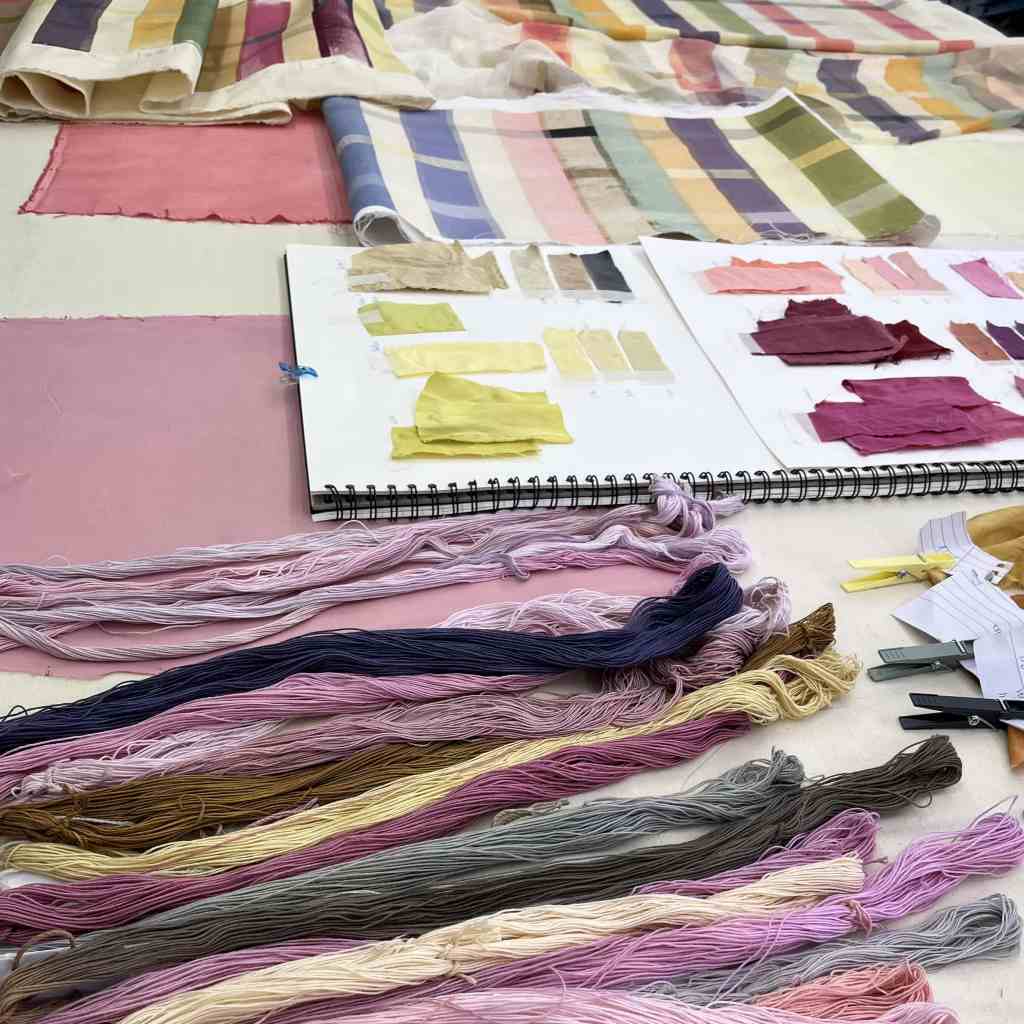
We took the students sketching at The National Gallery of Armenia; seven floors of marble-clad interior, and a trove of Armenian greats. The students showed us the quintisential Armenian painting by Martiros Saryan. A sublime-coloured depiction of the countryside, complete with dancing villagers, and mountains. Outside the museum it was underworld-hot. In TUMO’s newly air-conned studio’s we colour-fixed the sample stripes. They were disappointing; lacking vibrancy, depth, and variation in colour. Turning sleuths; we discovered a translation error for the mordant, a tiny word difference made a significant colour difference. Our co-conspirator in natural dyes, Dorothee, found balls of purest natural alum, and our colours were revived. We taught the students how to make cut-paper stencil designs, and they printed onto pomegranate/avocado dyed backgrounds. Flo and I started a collection of sample colour stripes for the studio, painterly-impressionist, as the newsprint degraded (we missed our tape from home).
On tour: TOAST London

On tour! Swooping through London, revelling in the clarity of a glorious sunshine-day. We wended bikes through the streets, to view our work adorning the TOAST store windows.
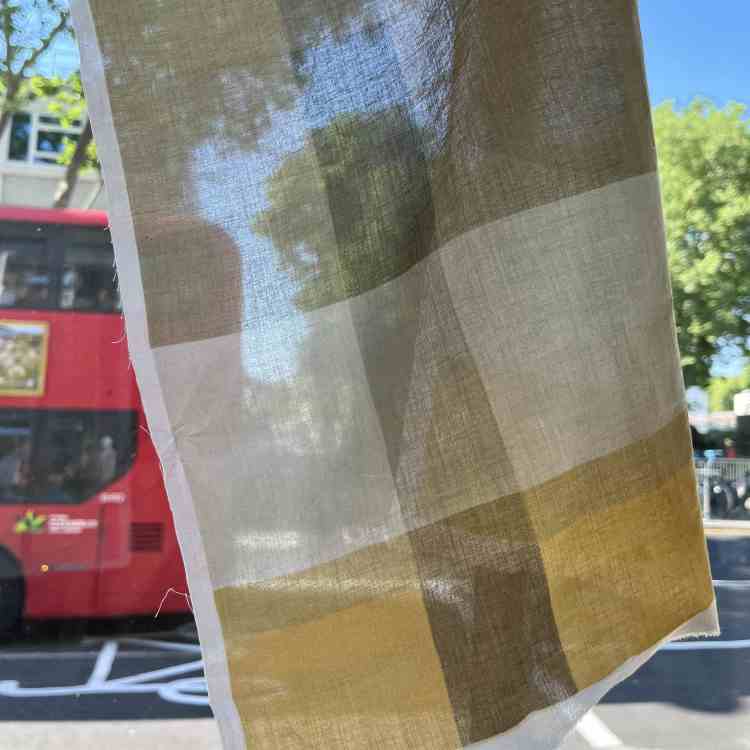
Bikes jostled by traffic in thronging Hampstead streets. Gathering speed on the train, then off, and cycling past a glam Islington wedding.
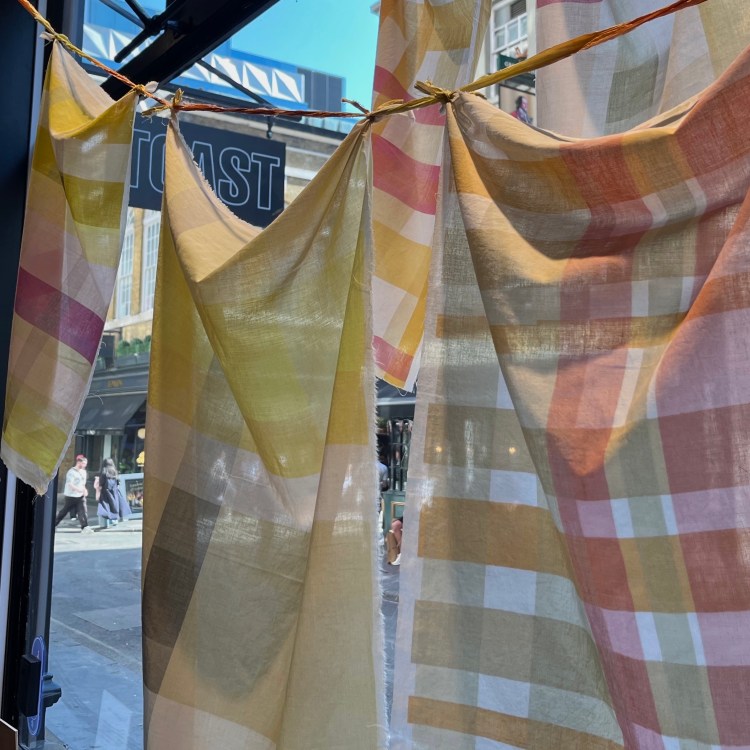
Dropping into the narrow streets of Shoreditch; the Toast store has a cool green garden.
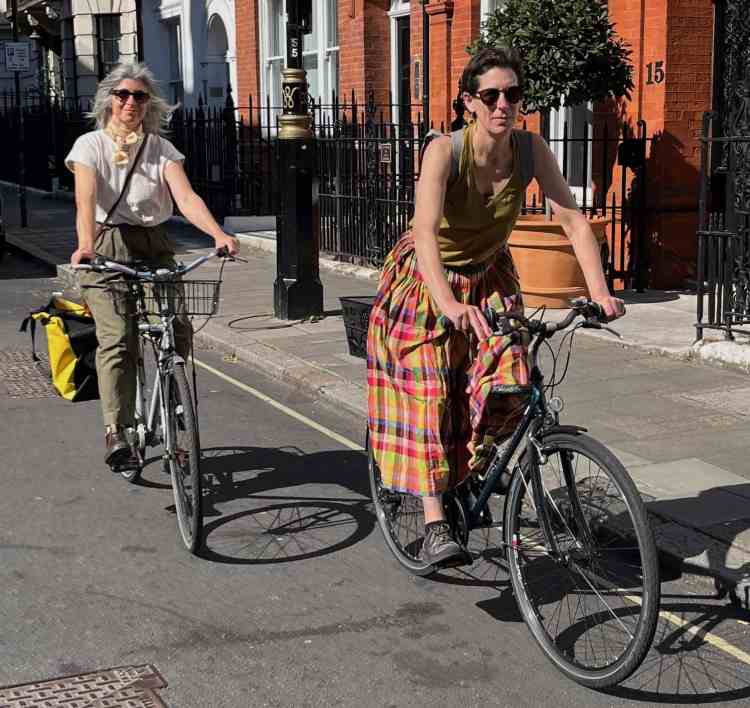
The afternoon meandered a tranquil route towards Soho, in a happy sustainable journey across London.
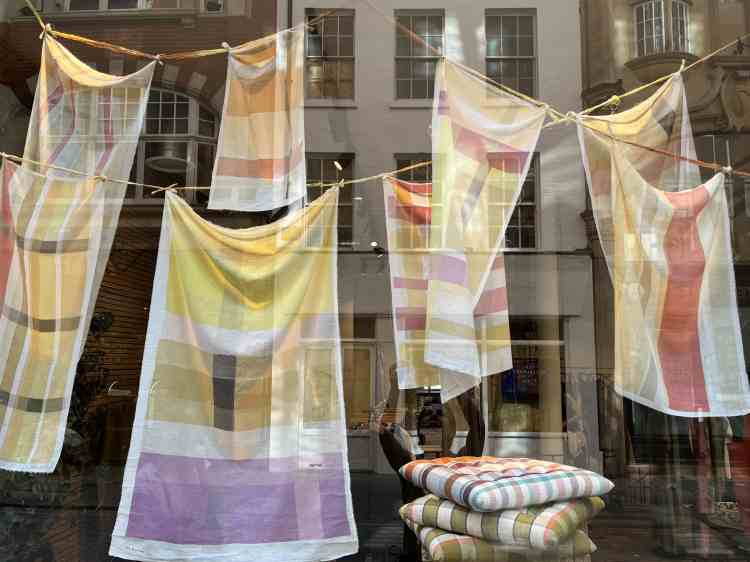
Love Toast Mayfair, the huge modern windows displaying fifteen panels. All the colourways, jaunty juxtapositions, prints vying for attention.
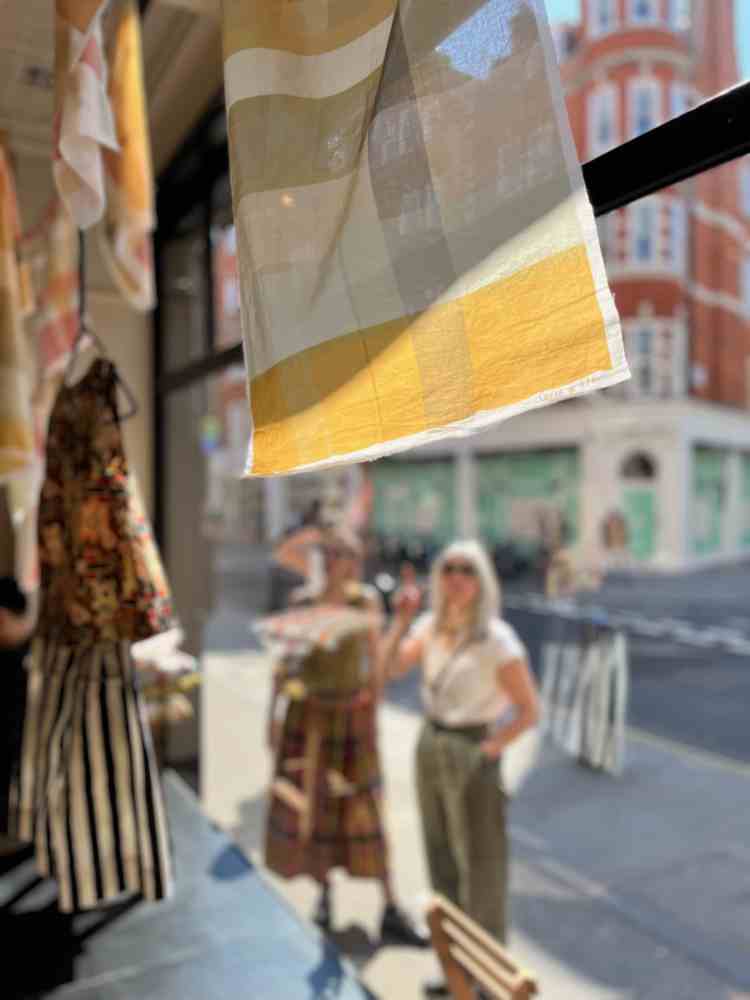
To have our work adorning shop windows in London’s iconic shopping districts; Kings Rd, Soho, Mayfair.
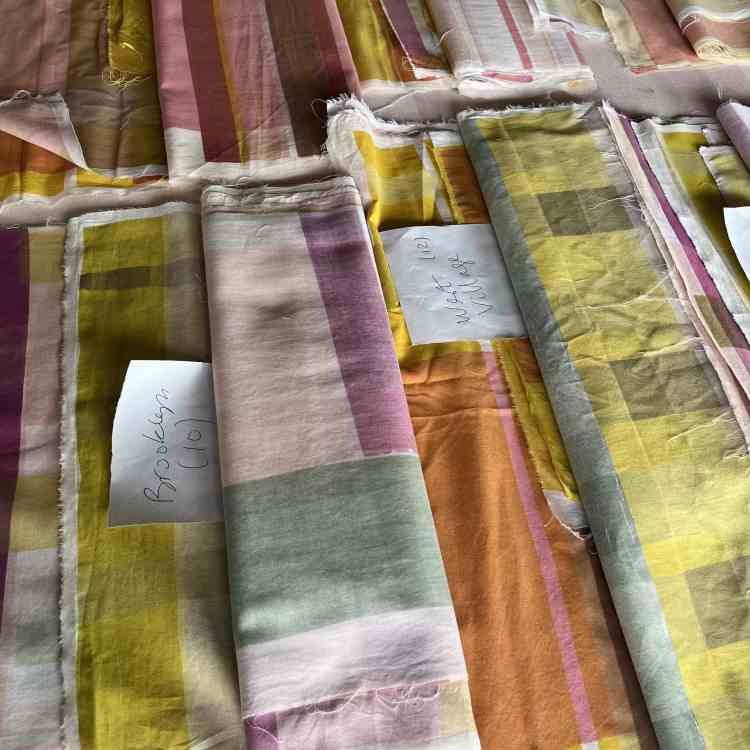
The printed panels can be seen in 23 Toast stores across England, London, and New York, throughout the month of May. The bike’s will not pedalo across the Atlantic.
TOAST: Ceres
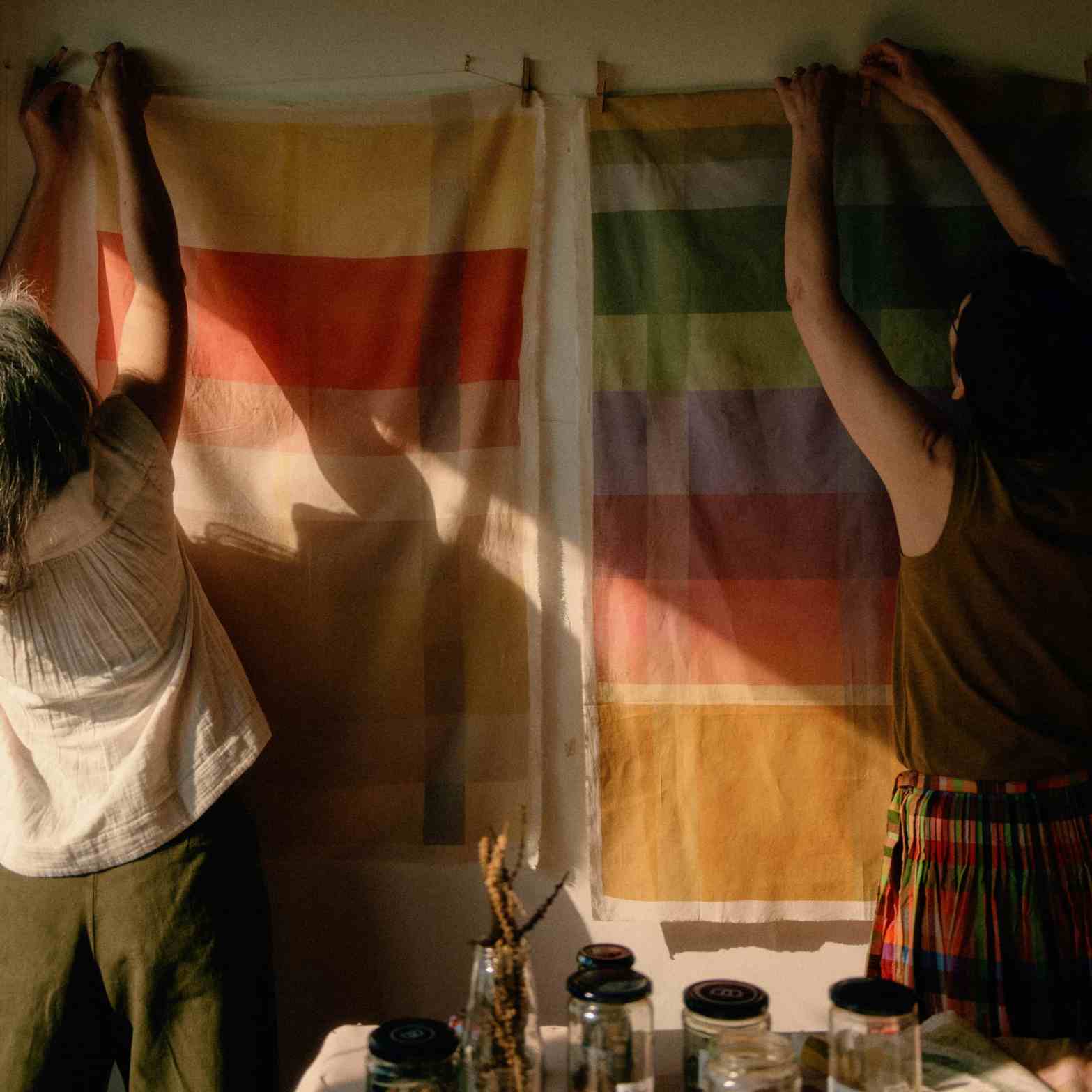
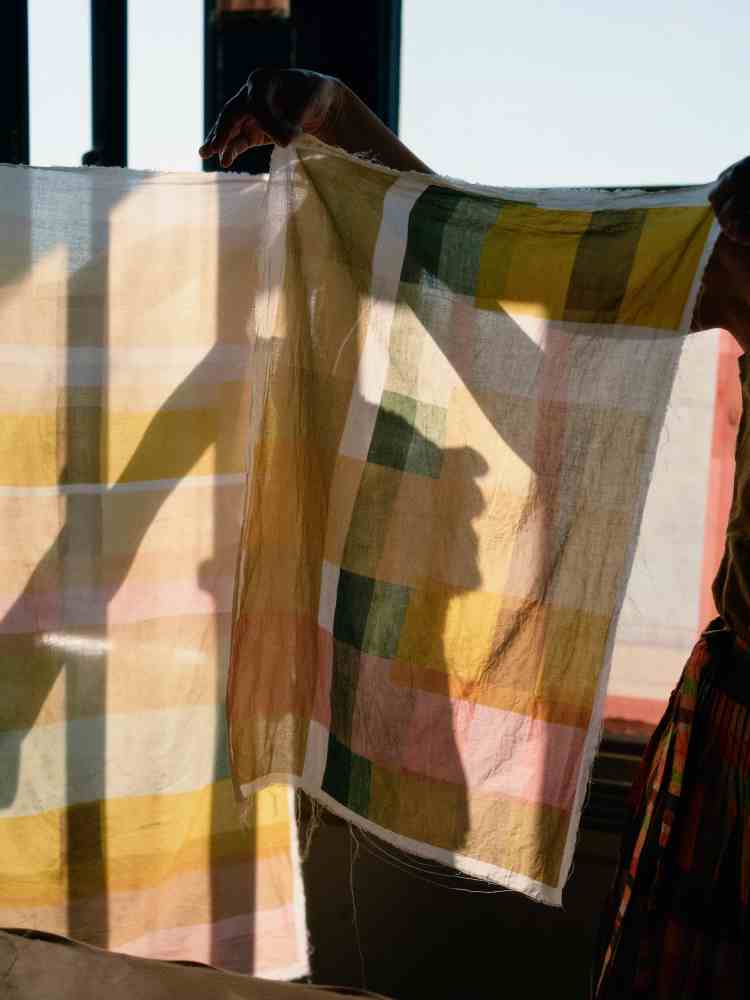
A Lightness of Being.
A collaboration with TOAST for their seasonal concept.
Ceres designed, printed, and curated panels in natural dyes to hang in the windows of all TOAST stores.

Mesmerised by two-hundred-and-thirty-one panels of criss-crossing soft-shades.
Each stripe of colour tells a story. Provenance is a tour of Western Europe; Burgundy oak, Brittany bark, London indigo.

Nettles. Fresh, just unfurling, from a rooftop garden, gently soaked for several days. Mixed with farmers marke red onions skins for deeper green. Or, Brixton weld from Flo’s garden for a vibrant shot of Spring.

Color of remembrance; madder roots from Susan Dye, of Rainbow’s colours. Orange transposing to pink, beautiful colours for the soul. Spanish pomegranates, holding images of sunshine and friends. Whiff of fermentation as we print.
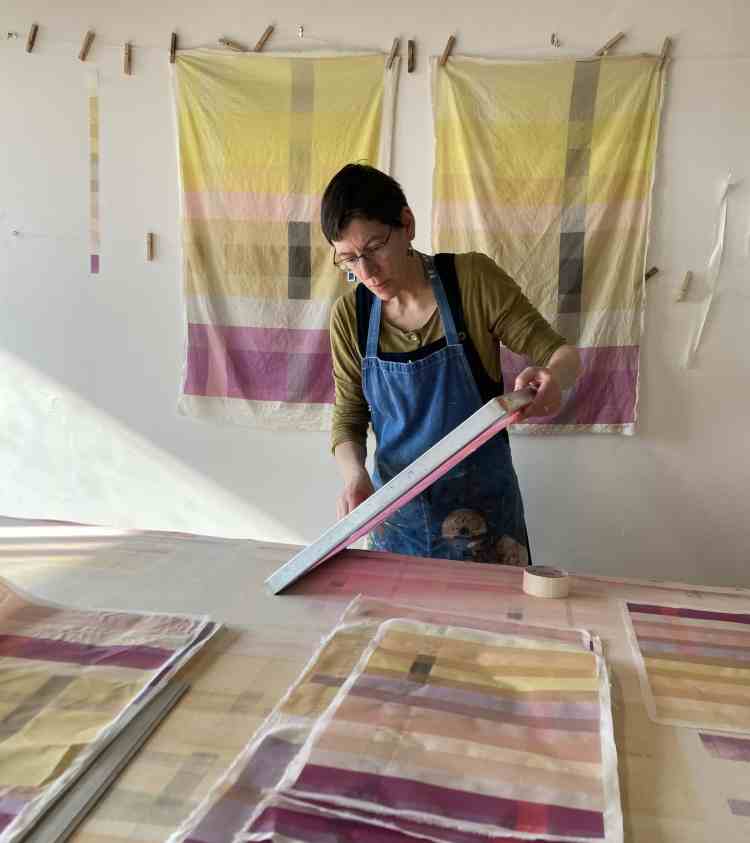
We are immersed in our designs, slowly emerging from overlapping colours. Some sliding into peripheral consciousness, others boldy announce themselves.

Each panel unique. There is a longing to display them all together, festoon, to meander through tranquil swathes of lime, tangerine, cherry and cucumber.
Words: by Ceres.
Images: header, 1, 2, 3, and 5, by Lauren Maccabee for TOAST.
Image: 4, Ceres.
Aberfeldy Stories: Colours of Home

The printed banners in the Ceres studio, Brixton, prior to being waxed and installed above the streets of East London.

Ceres were invited by Company Place and Lola Lely to interpret artwork using natural dye-print. Ceres made these tiny flag designs, and translated them into huge hemp banners. Destined to float, flutter, and wave, above the streets of Poplar, East London.
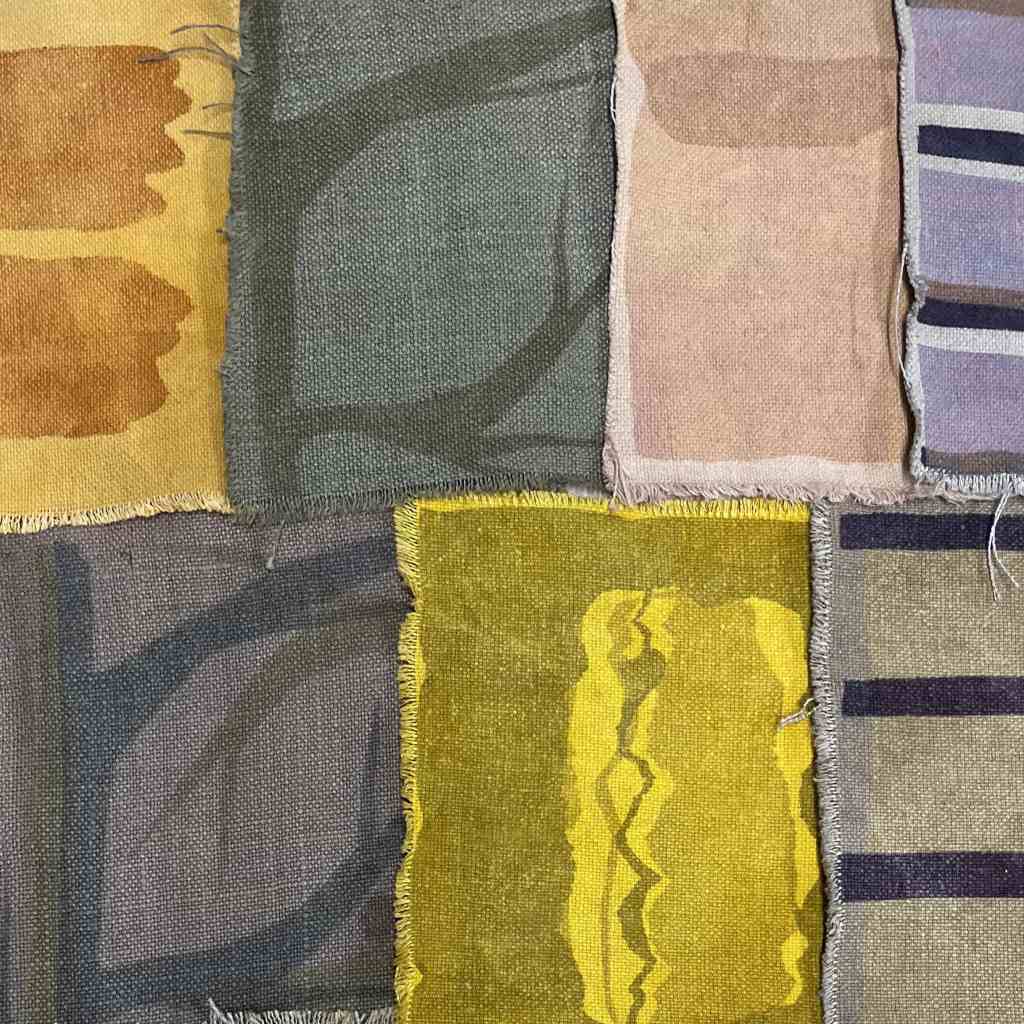
Ceres colours were in response to a palette initiated by community workshops in the Aberfeldy neighbourhood. We gathered dyes from bio-waste, and gardens in our locality; provenance of cafe’s and scrubland.
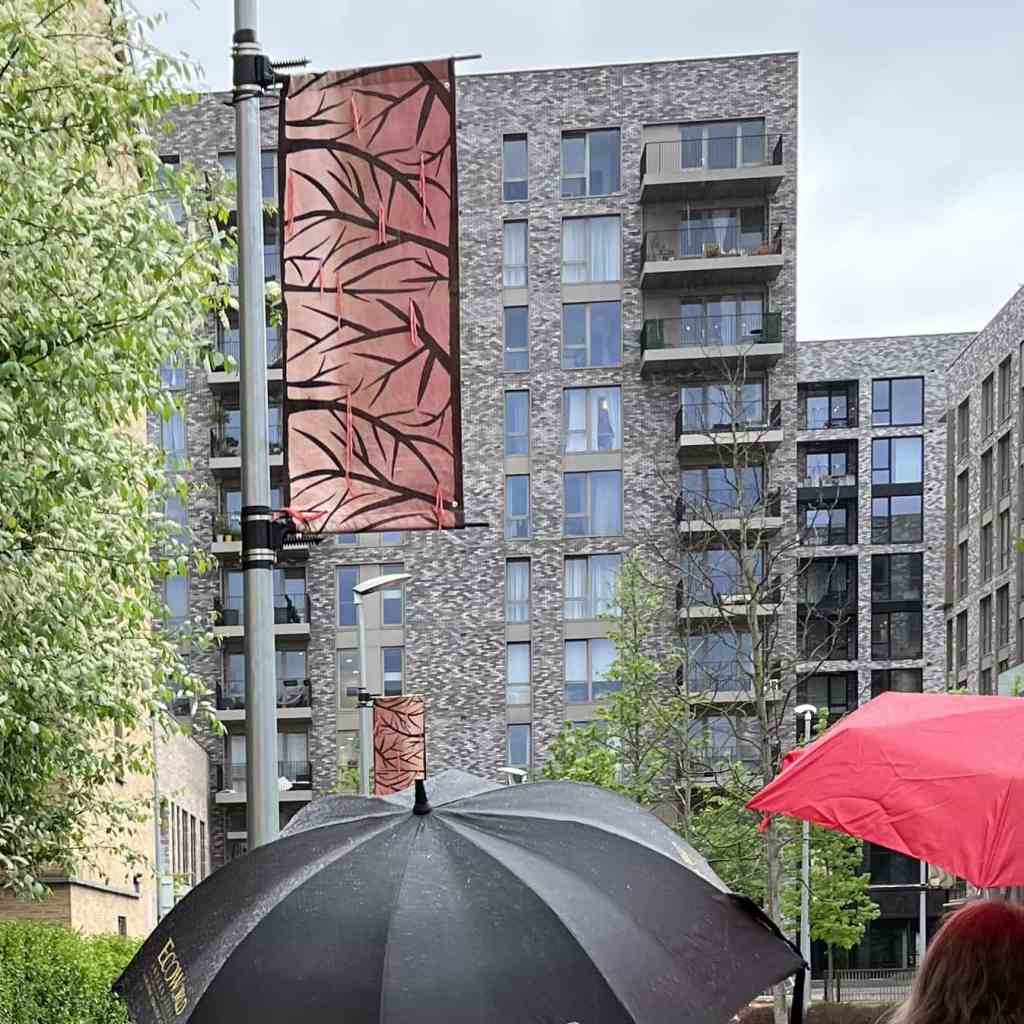
A unique public art installation, showcasing natural dyes on a large scale. These low environmental impact printing techniques, developed by Ceres, promote harmonious colours of the locality.
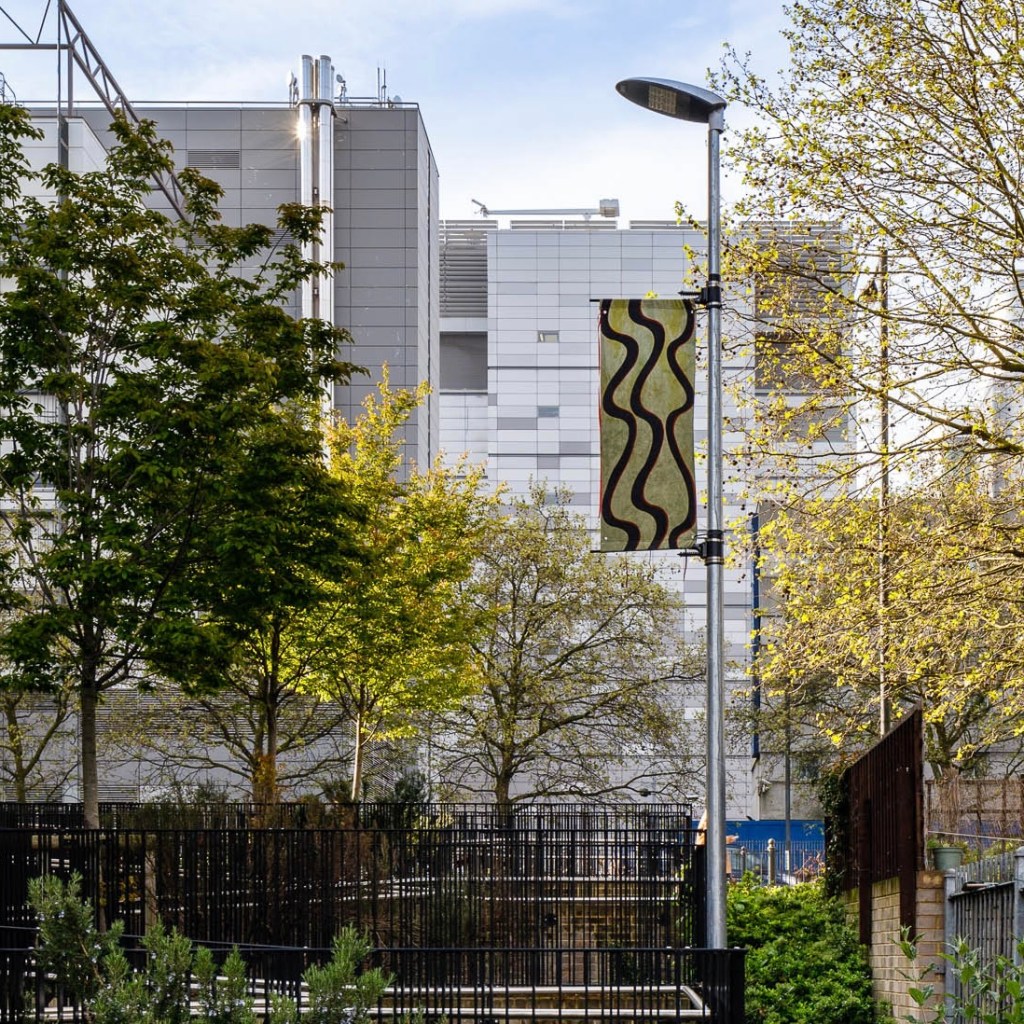
Most of the banners hung outside in Aberfeldy, braving the weather, and testing the endurance of natural dyes.
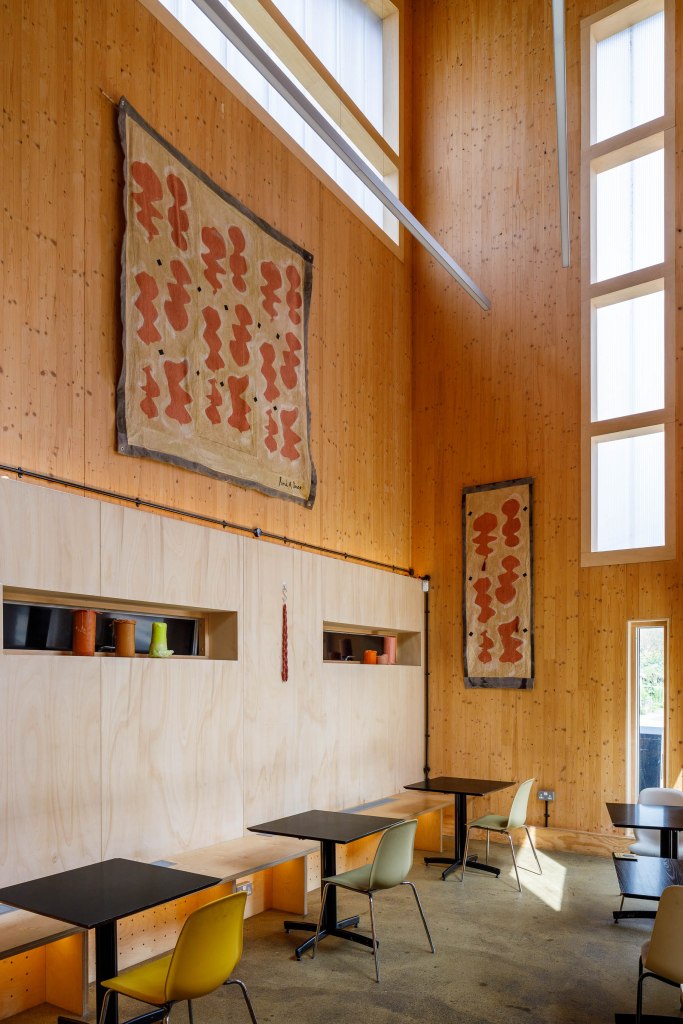
Some banners had a cushier existence, in the cafe at Poplar Works where the Colours of Home trail ended.
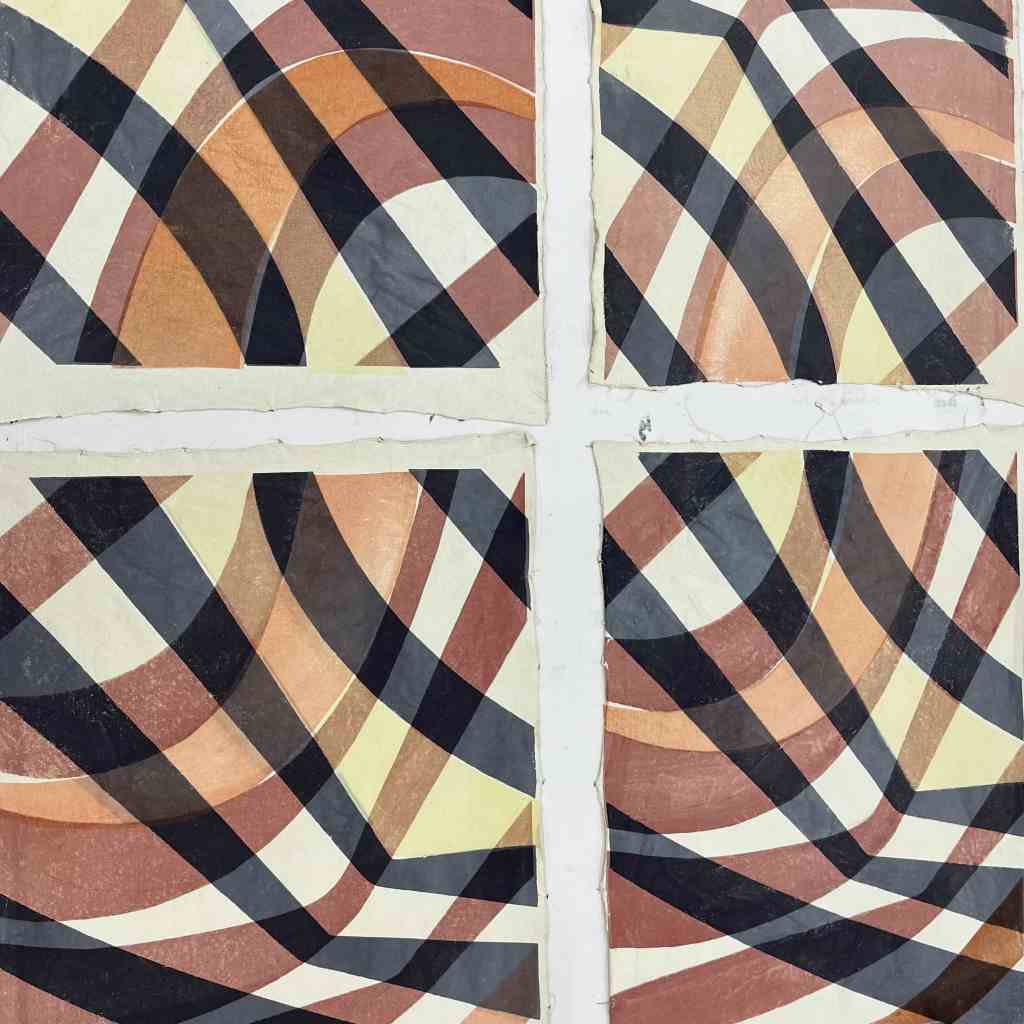
Hemp is a durable, robust and heavy. A logistical printing challenge, and a physical work out. Ceres tested methods, and researched new recipes to achieve a smorgasbord of colours and the rich black.

The banners were large. Six designs, six prints of each.
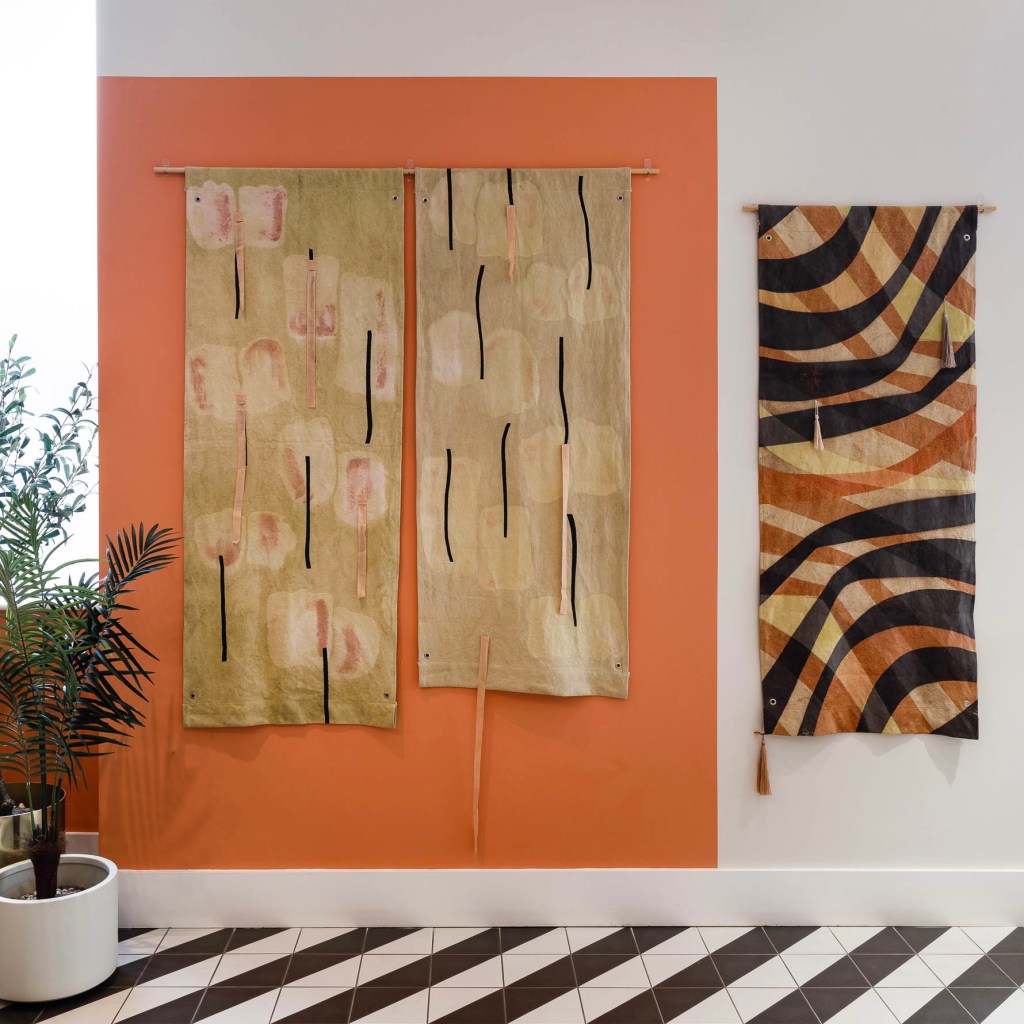
Beribboned and adorned, the banners spent Summer 2023 bringing colour and pattern to Aberfeldy Village, Poplar.
Becoming an ecology
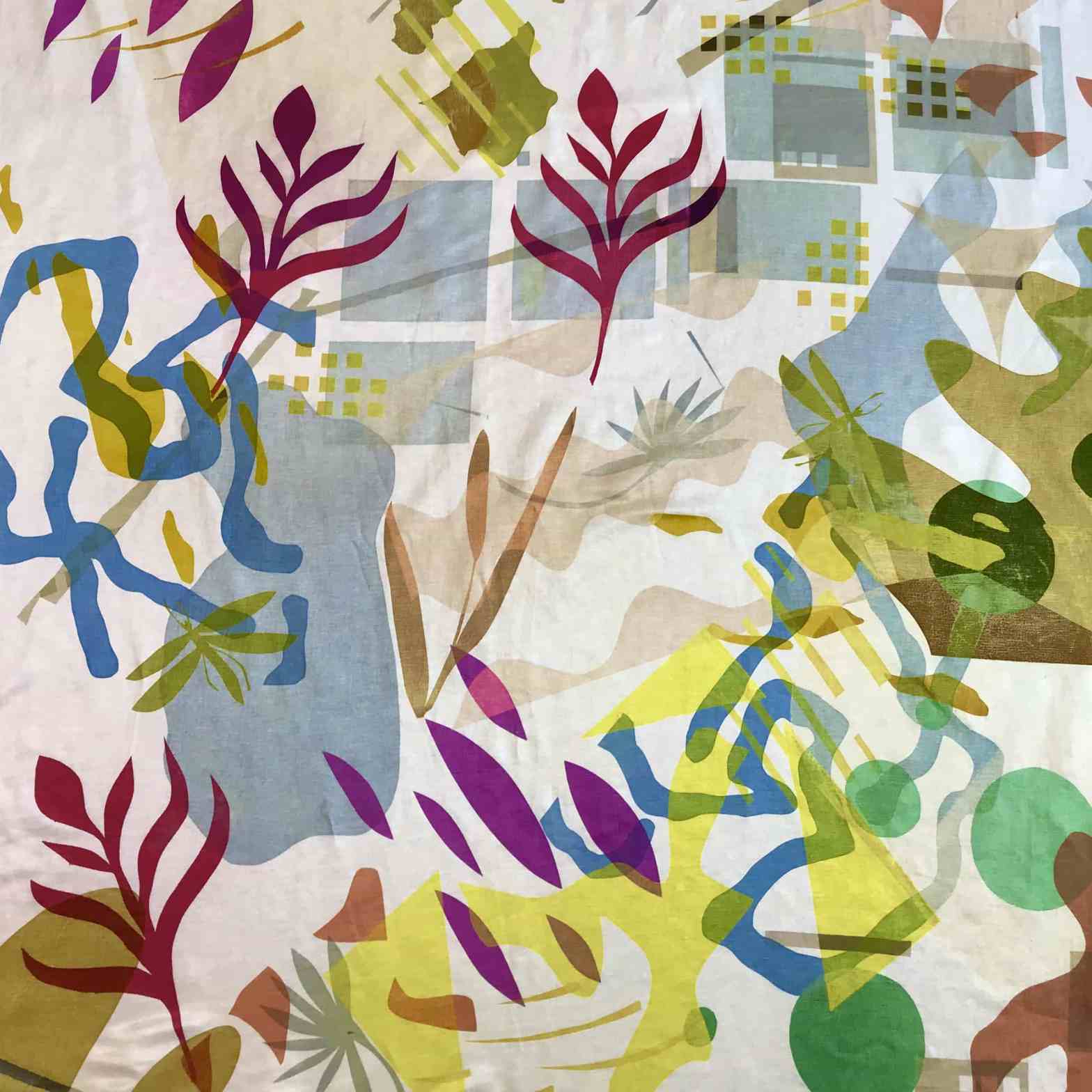
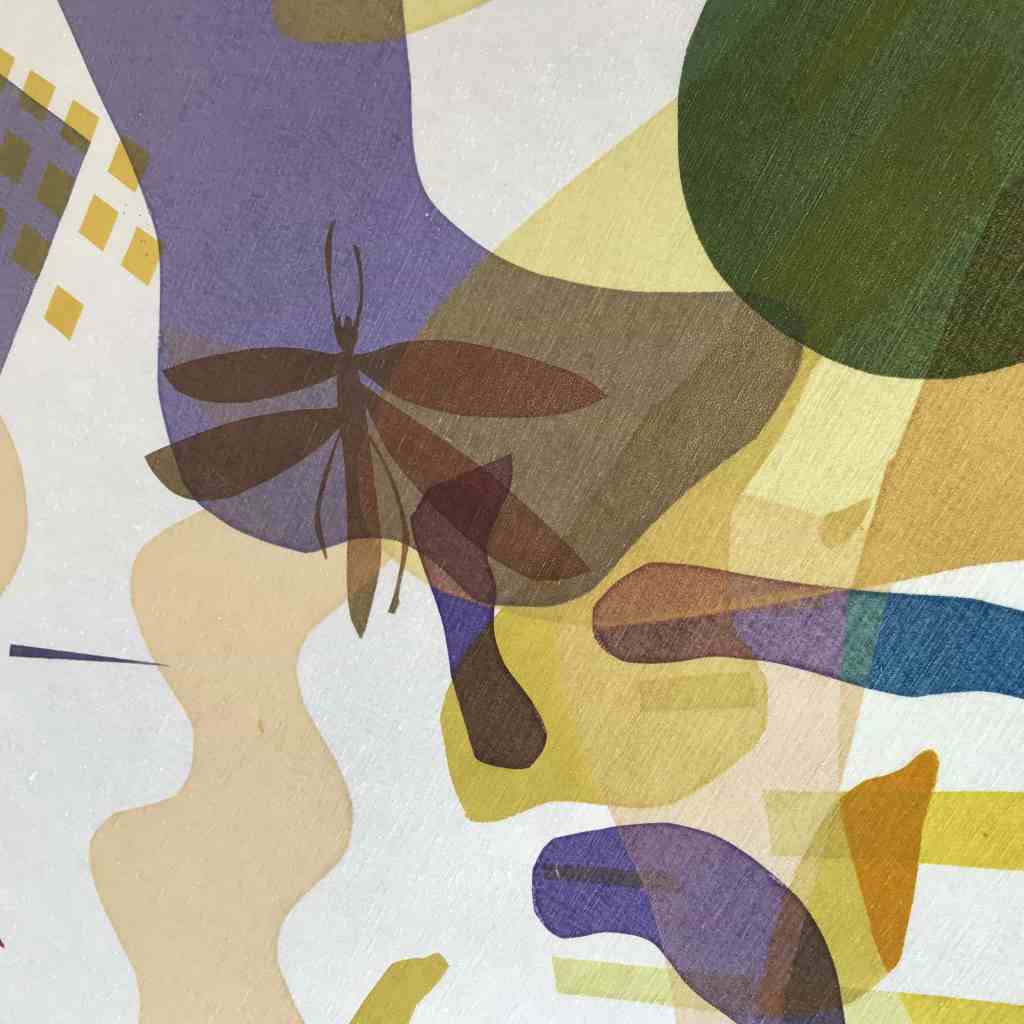
An extravaganza of sustainable colour.
We invited Ceres alumni to become part of an Ecology of natural dye print. To contribute to a day of sharing ideas, co-designing and playfully exploring print techniques. Organised by Lara, as a component of her MA in Academic Practice, and co-hosted by Flo. Lara was researching how practitioners navigate this emergent natural dye-print movement. How a process may influence designing and making, and how a commons approach could encourage experiments, learning, and adoption of ideas.
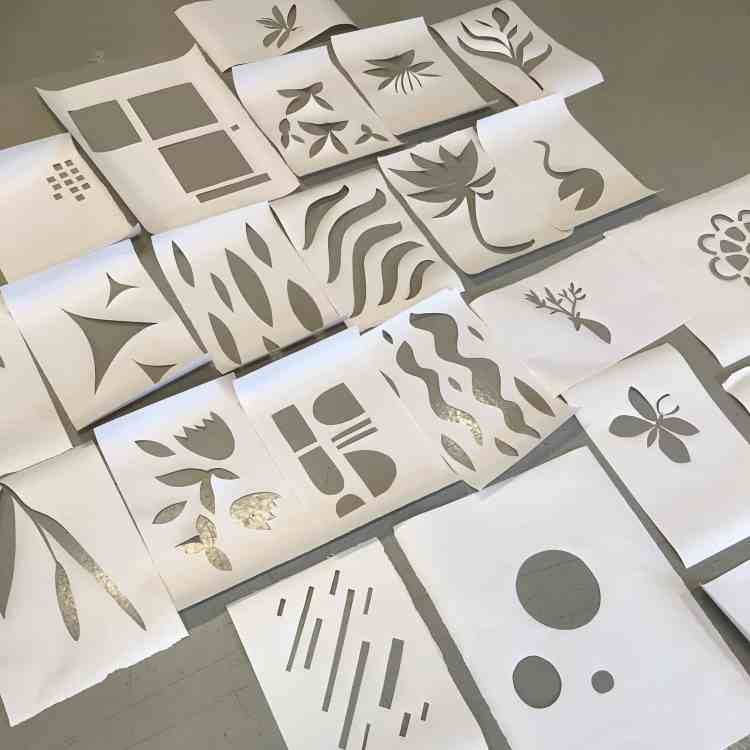
Inspired by a youth spent at dance festivals, trading steps of pattern and rhythm on the dance floor. Swing camps, dancing all night, where invention happened at 3.00 am in the subliminal spaces between sleep-haze and dawn-light. A desire to create a similar sensitivity of community in natural dye printing; with an ethos of playfully sharing to develop a design. Perception flourishing amongst the collective making… chat, cut stencils, arrange, print, this is our liminal-light learning.
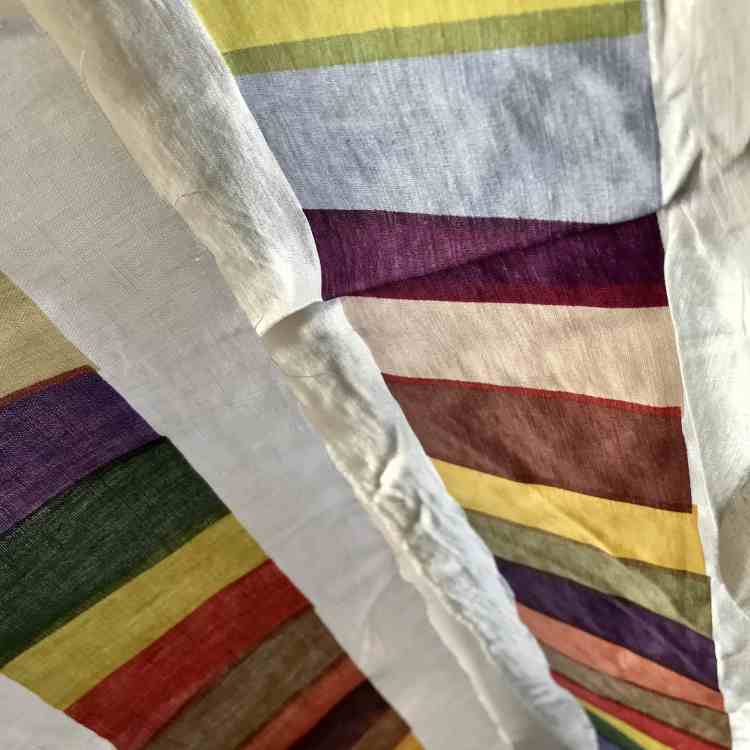
Silk-hemp, a luxurious, cost effective fibre-mix that reflects Ceres interest in sustainability was chosen for the printed studio length. Linen, for the participants take-home prints. Lara made a smorgasbord of dye colours, predominantly bio-waste for the linen, and colourfast heritage plants for the silk-hemp. She printed two sample sets of the key colours on both fabrics, enabling participants to reference both washed (colours can change dramatically) and unwashed.
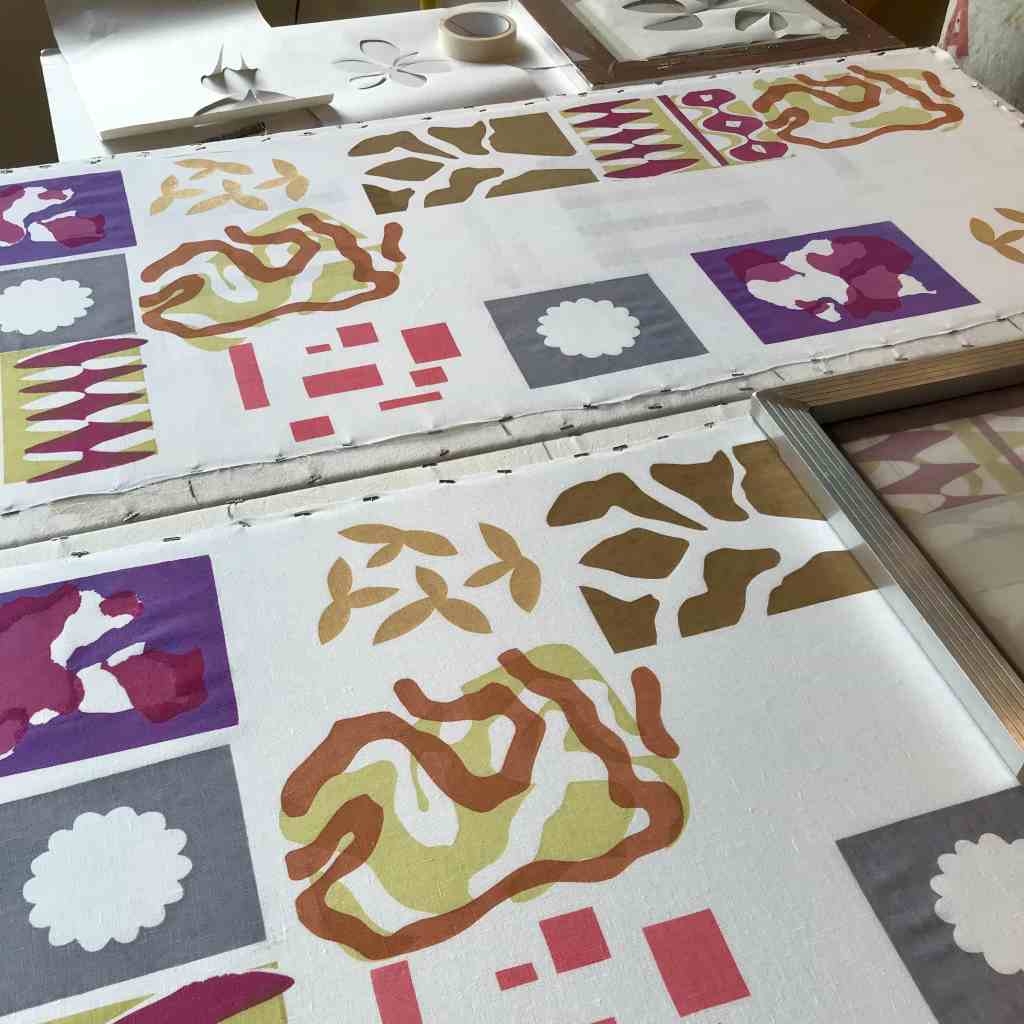
To-ing-fro-ing. Dance manoeuvre of collaboration.
Flo arrived in the morning with a linen epiphany. She described a “quilt” of squares, a sampler, where participants could work into each other’s designs. They would print two pieces of linen, one for Ceres and one for a take-away. Perfect idea! Except, participants in awe of others designs, were loath to over-print and change their squares.
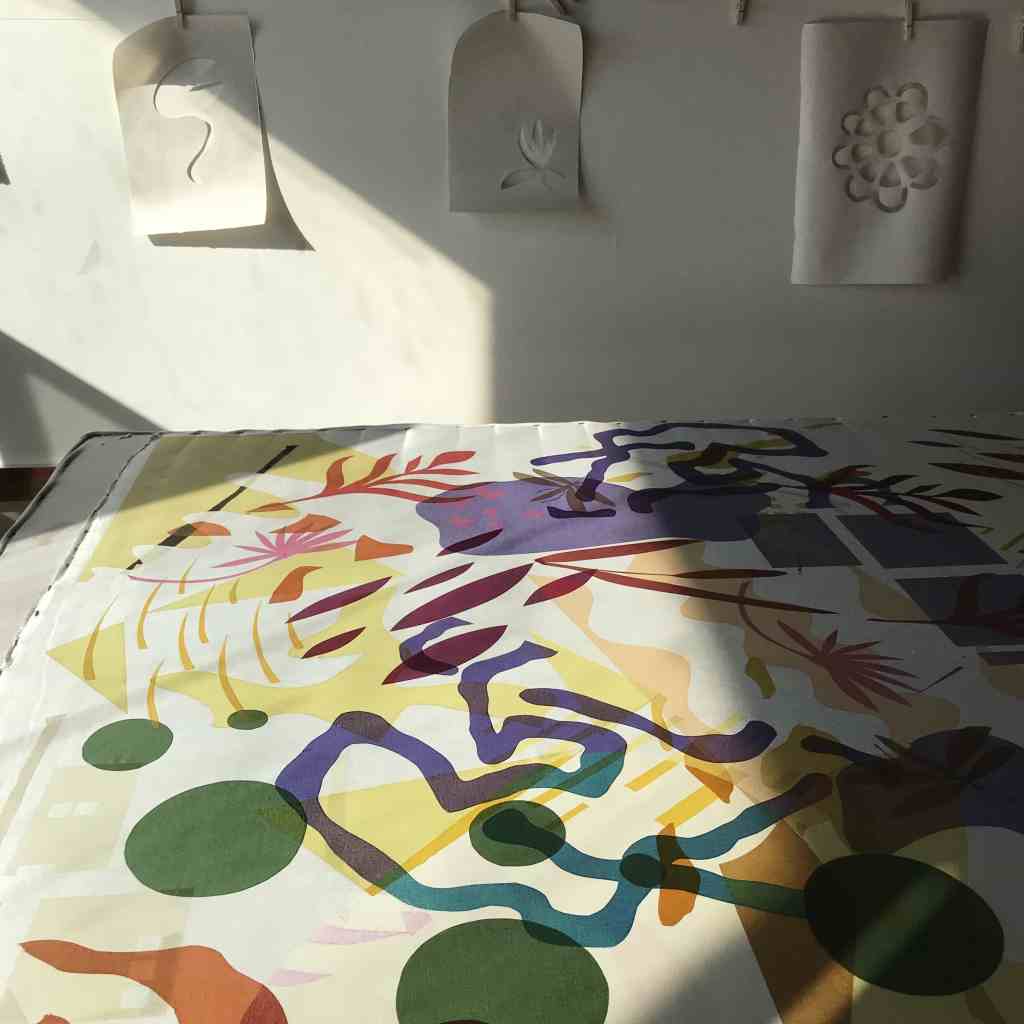
Serendipity of printing.
The design theme, Place and Provenance was taken literally; Googled and mulled, then whoosh, and they were gone. Chatting, trading, manoeuvring screens. Stop-motion recording a choreograph of steps around the print table.

Morning; transformations as the groups responded to each other’s prints on silk-hemp.
Lunch; steaming dahlia prints, journeying from Somerset to Greece, a suitcase of flower rich scarves. Making dye-paste from Meadowsweet from the Isle of Skye, perfume of marshmallows and a gleam of yellow.
Afternoon; a thrill of mystery, modifiers printed onto the silk-hemp, participants quizzing how beige dye may metamorphose into intense new colour. A flurry of shapes blossoming across the fabric, a burst of paparazzi, and a tight roll into the steamer for fixing.
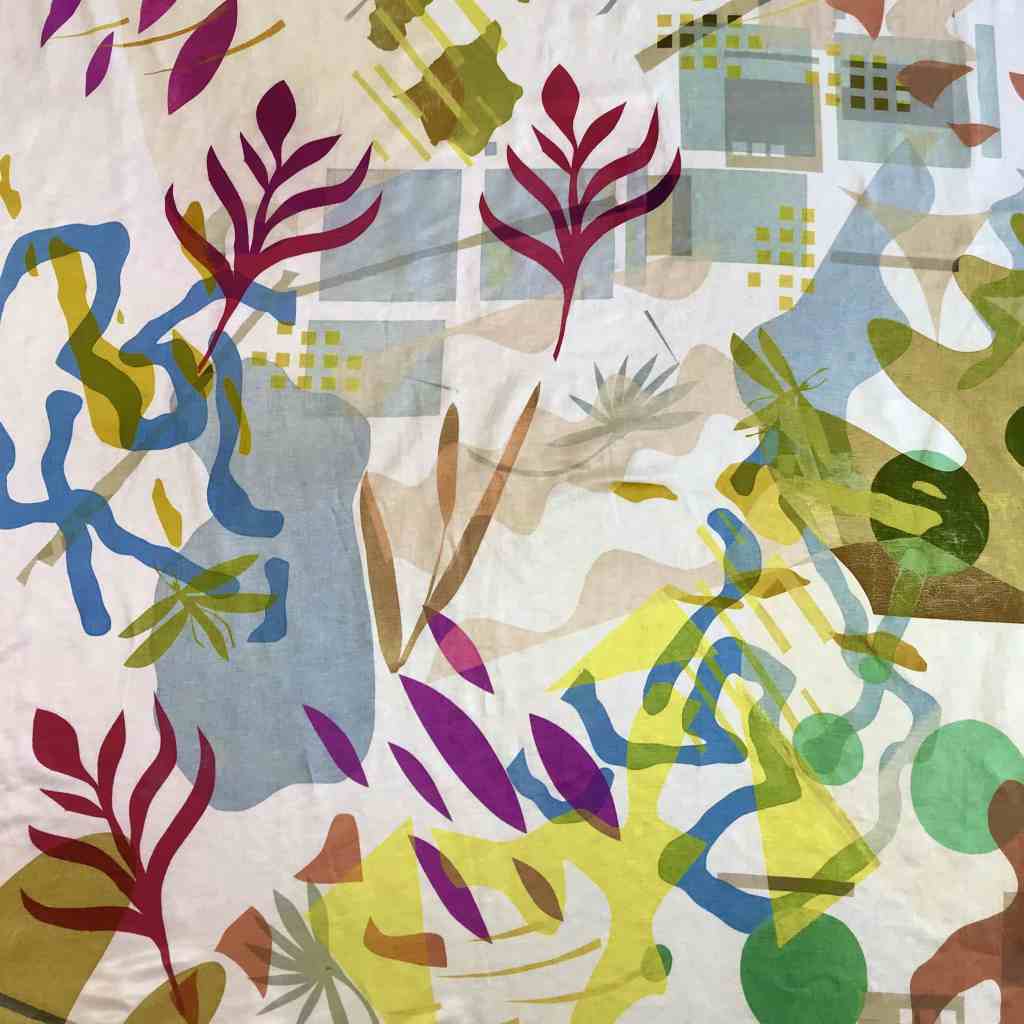
A parade of linen and silk-hemp sashayed into the room, unfurling for display and contemplation. Silk-hemp fixed but not yet washed, the linen fixed and washed.
The Preview, to share participants personal work and the prints created during the day. Unique screen printed fabric garlanded table tops and scarves lounged over the display table. The silk-hemp was taped to the wall, and toasted with prosecco.
Provenance, Brixton. Flaunting the newest sibling in the Ecology of Natural Dye Printing.
A giggle of pattern makers
Salty-chalky Steyning mud from the banks of the tidal river Adur, an incongruous contender for voguish sludge; slither away Glasto-cool-ooziness and clay face-packs. Sarah Burns showed us beautiful designs created with mud resist and indigo dye, syncopations of blue and off-white, like diving into an Aegean sea. A natural rhythm to the process; cut stencils, paint mud-resist, air dry, and then dip-dye with several immersions because it’s indigo.
Flo and I, day-trippers from London, played with plant colours and new ways of working. Block-printing, with Sarah’s lino-cuts to make swathes of movement with jazzy edges, and geometric designs using Flo’s modern laser wood-cuts. Admiring huge outside vats of Golden rod and St John’s wort, so organic that little creatures were happily swimming in it. Our Brixton studio has big windows, letting in the light and long views across London, but no large garden to slip-slop with dyes.
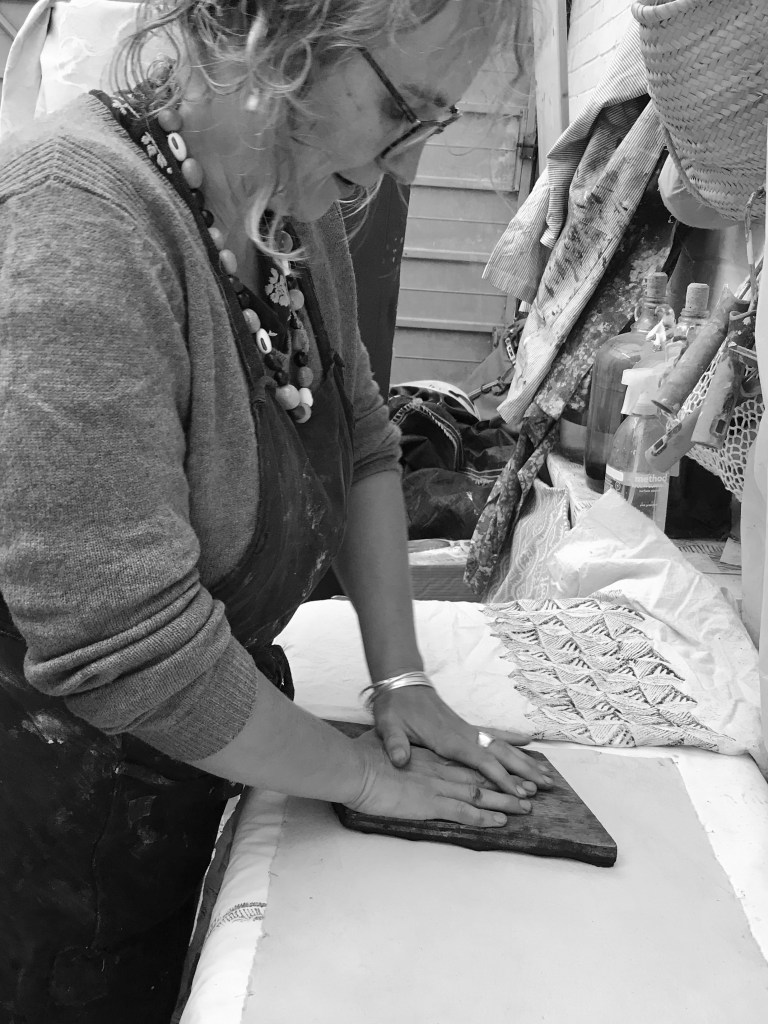
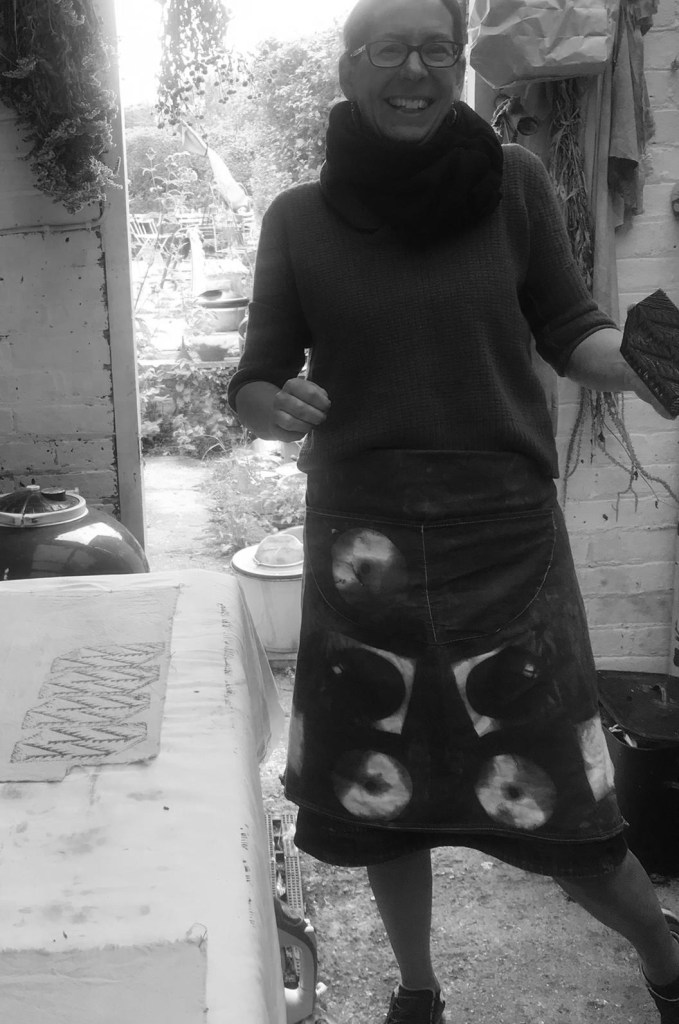
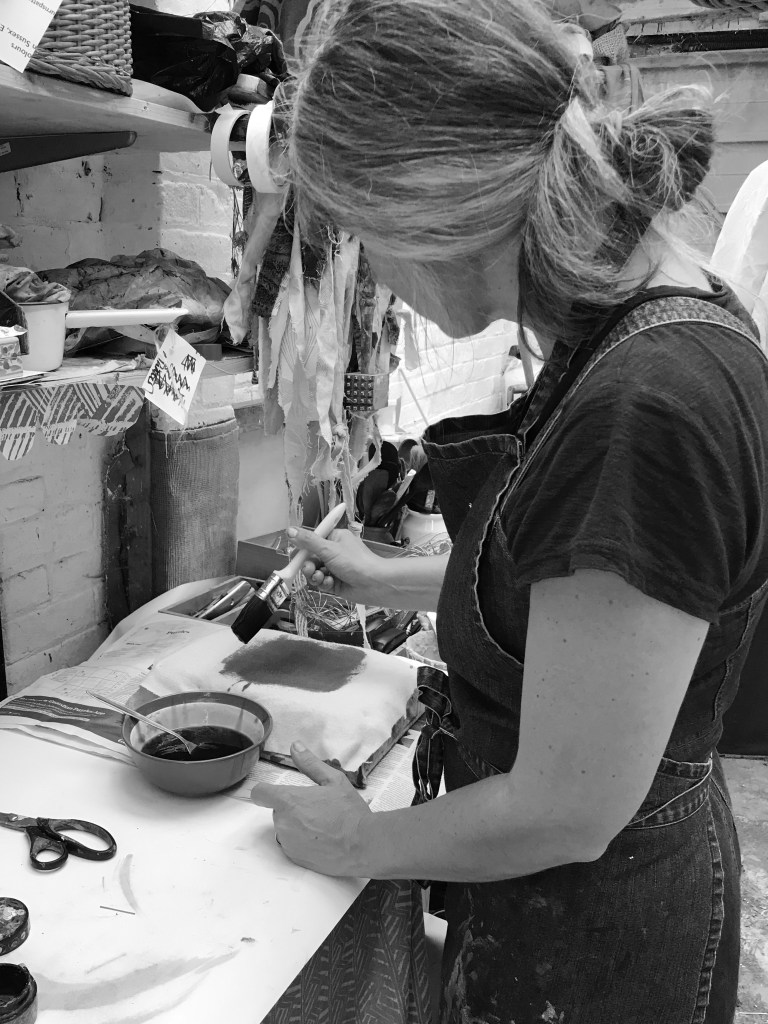
We chatted, obsessed with processes, and about how ingenuity and frugality are part of the slow pattern of this craft. There is similarity in our ways of working; revisiting, and being re-inspired by ideas generated years earlier. A deliberate measured pace of design, looping the learning from our techniques back into our making. We discussed our motivations for this way of producing in harmony with seasons and land, and how these qualities are a part of the emergent blossoming of the circular design industry. Talking about creating and marketing natural dye products for the modern textile industry, where colour is dictated by pantone reference, rather than plant, time, and place. Sarah is an avid supporter of small heritage companies, tiny and vital in the supply chain, a cog in a connection of ancient endangered crafts.
A foragers delight of a track leads from Sarah’s house, edging past ghost-quarry reminders of Steyning’s industrial legacy, and up to the South downs. Steeply. We saw walnut trees (black), and elderflower (dark blue), goose grass (pale pink), sloe bushes (nicest of silver grey), and so many potential yellows. Half-way to the top we looked back and downwards, to an Eric Ravillious assemblage of hills, villages, and fields.
We returned to London with a strong sense of Sarah’s vision of colour, pattern and location, and a clutch of fabrics. Air curing burnt-orange cutch block prints on soda-ash mordanted fabric, acorn-black, and blue-grey iron prints on an alder dipped base. Adur mud, clinging onto calico, ready to immerse in our indigo bath. Imprints of Sussex traditions and craftspeople, passing knowledge, collaborating, and learning.
 Ceres Studio 1