Armenian narrative. 3.

Second week. We are excited by blue made from purple aubergines peel. With the students we discuss designing a collaborative silk (avocado dip) square, complemented by individual stripes of the super-springy wool (pomegranate dip?)

Evening was magical-intensity, swimming in a turquoise-mosaic pool, soaring above the city, with a thunderstorm reigning the sky. TUMO’s summer party was at a house perched atop the Cascades. Hidden, accessed via tiny lanes, in a harried taxi. The Armenian style house, opened onto a terrace, where we ate gazpacho and traditional dishes. The pool enticing-beckoning in the pre-storm swelter. The hostess conjured up towels and the most stylish of black swim cossies (because who brings bathers to a dinner party). Succulent and wooed by the splendour we swam until rain-lashed lightning drove us from the water. We left the party via a tiny iron staircase, into the wet-shiny marble Cascades darkness. That night I dreamt of a wedding 25 years ago, in an ancient Italian villa, swimming, and dining with friends. Yerevan is elegant, charming, and hospitable.

Morning, and to the museum of Martiros Saryan, Armenians favourite artist, and increasingly mine too. Coloured mountains, dancers, flowers; our Yerevan-TUMO colours pay homage to him. I brought a book of his costume sketches, similar to Leon Basque. Rivals?

Flo found Armenian mulberries in a park; intense, smaller than uk ones. Similar to those found in Cévennes, a traditional silk producing region of France. Flo notices more dye in the cityscape than I do, the too-fast-walker. Sonia, in a genius-move, suggested designing the collaborative scarf as a game of consequences; with five mini-sketches passed around the table. Voting concluded, and by evening we had hills around the edges, and an amorphous peace sign inserted into the pattern. Tomorrow brings the flowers.
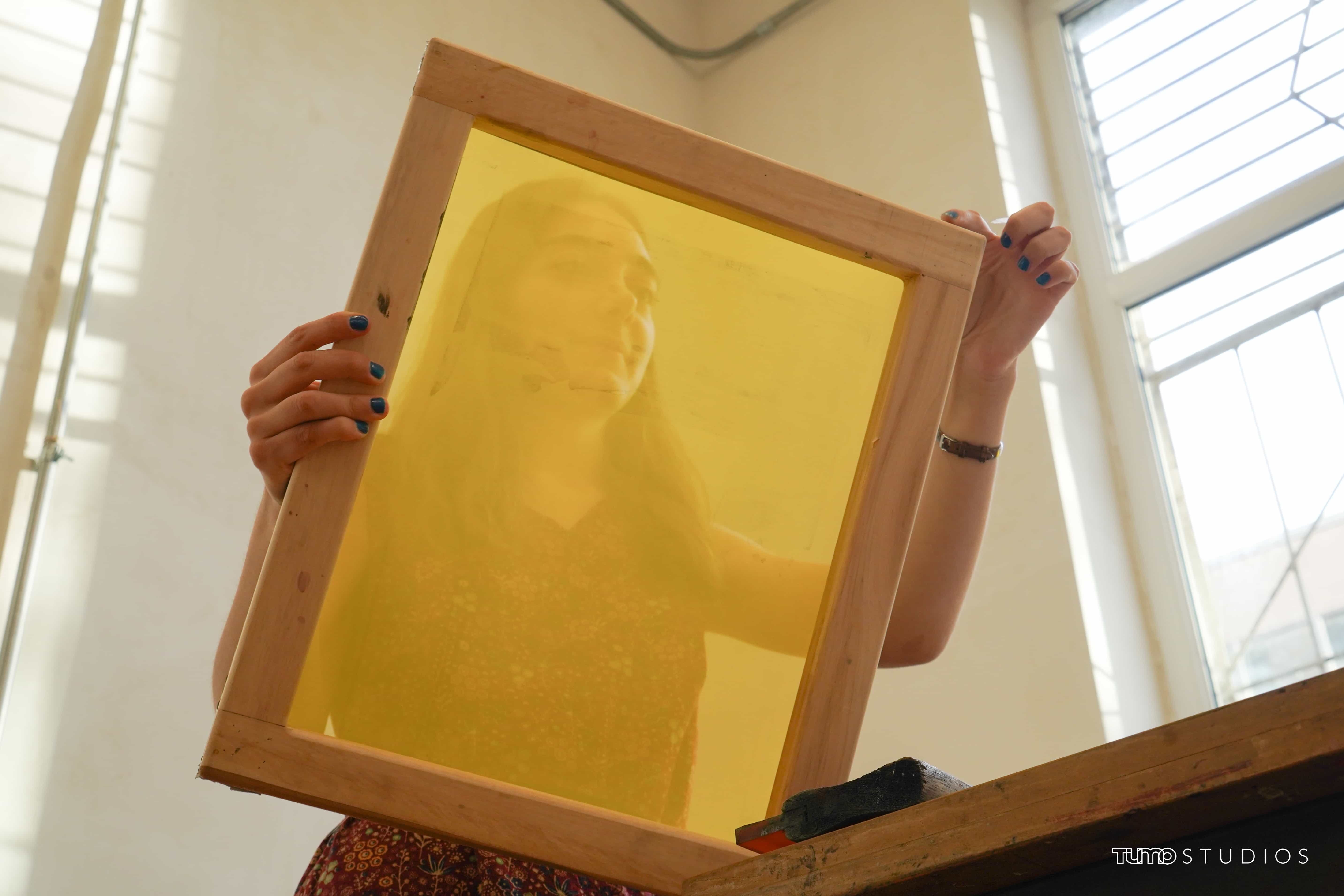
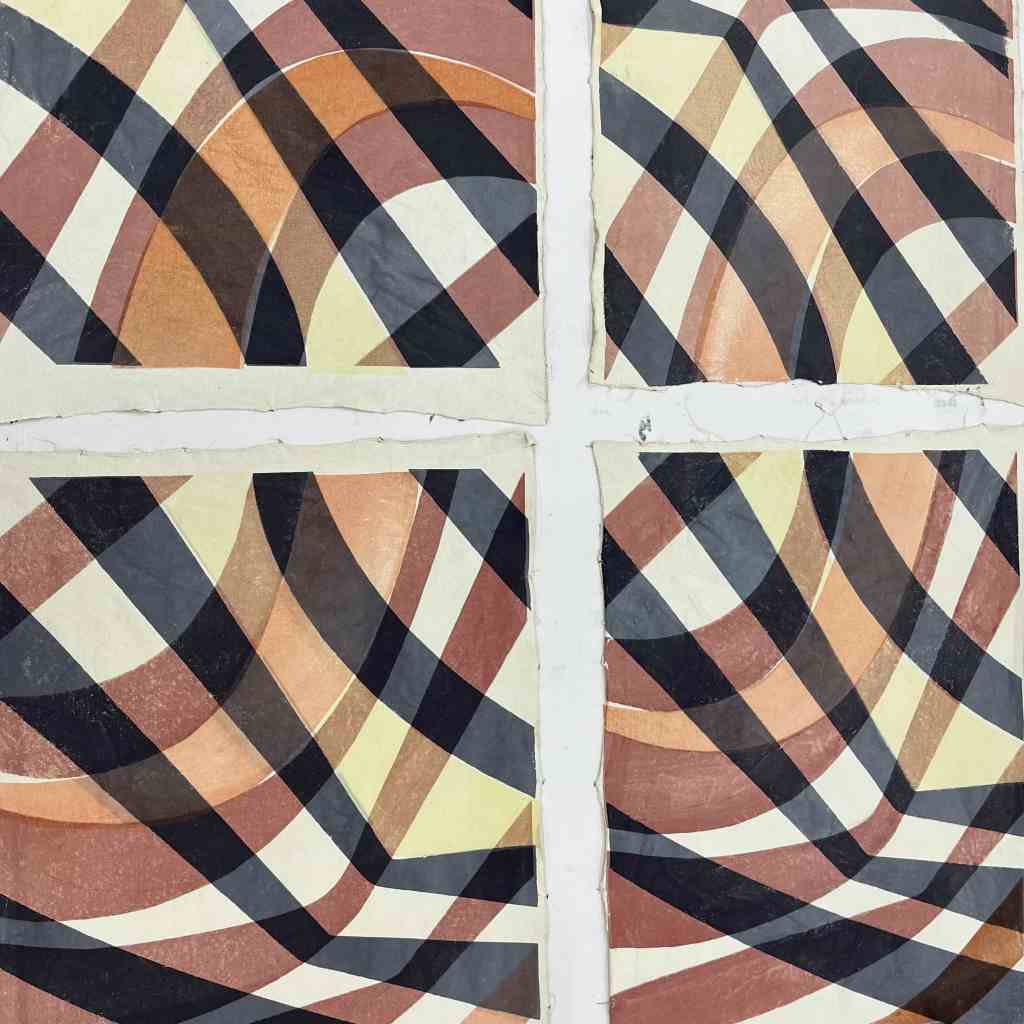
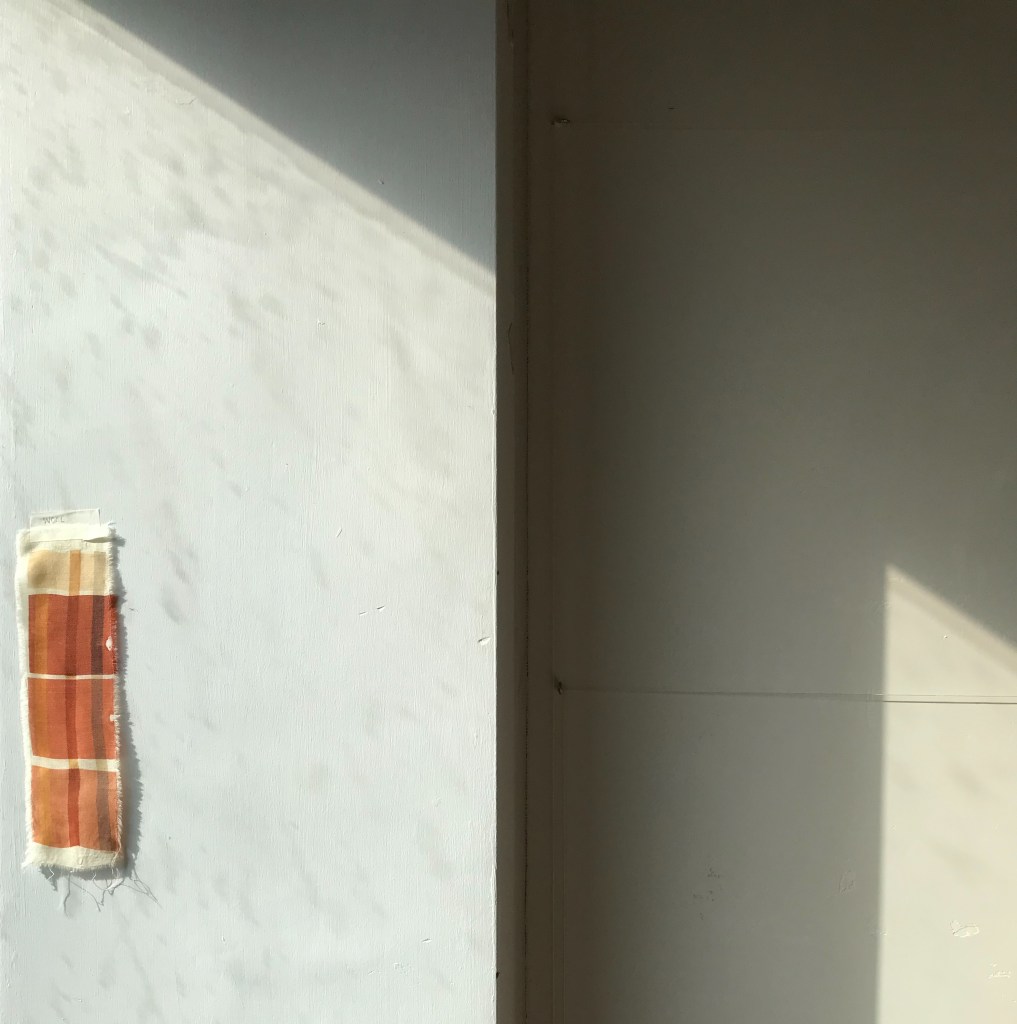
Days are sliding away from the two weeks that felt so long. Flo and I printed morning homages to the colours, artists and architecture of Armenia. Flo concentrates on the enticing shadows falling through the yellow blinds, I interpret Saryan’s landscape.

The students finished the silk with a snaking iron-aubergine print; a dance of print action captured by Mariam. We steam the silk, revealing just how far the students have progressed this week. The steamer is a low-tech miracle; we are experts in turning basic equipment into a print lab. Still blessing the metal screens and squeegees that we squeezed into our cases from London.

The hot-hot gg took us through the heavily congested city, no seatbelts, driver on the gas. We had a meeting with Hayk Oltaci, president and founder of Woolway. A rambling workshop for naturally dyeing heritage carpets and tapestries. Huge vats of mordanting yarns, and large dusty bowls of local madder root. Dorothy and Flo brought woven blankets made of new wool; the Armenia word for scratchy translates as “bitten by the yarn”. Hayk made us Lemonade, and told us his story. Armenian heritage, born in Istanbul, and recently reloacated his business to Yerevan after living in New York for 30 years.

Last studio day, and exhibition day! We are excited by the students achievements, hoping for a return invite, to this cultured, generous place.

Aberfeldy Stories: Colours of Home

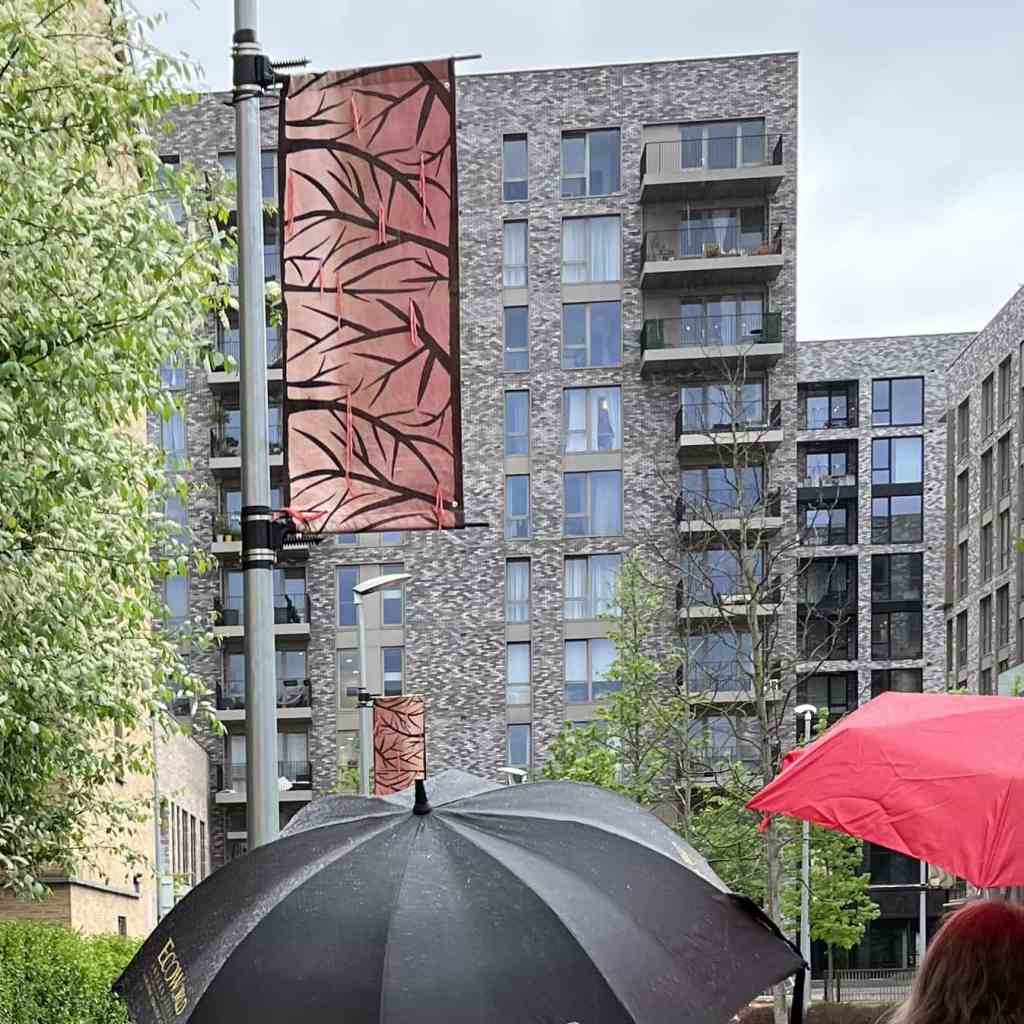
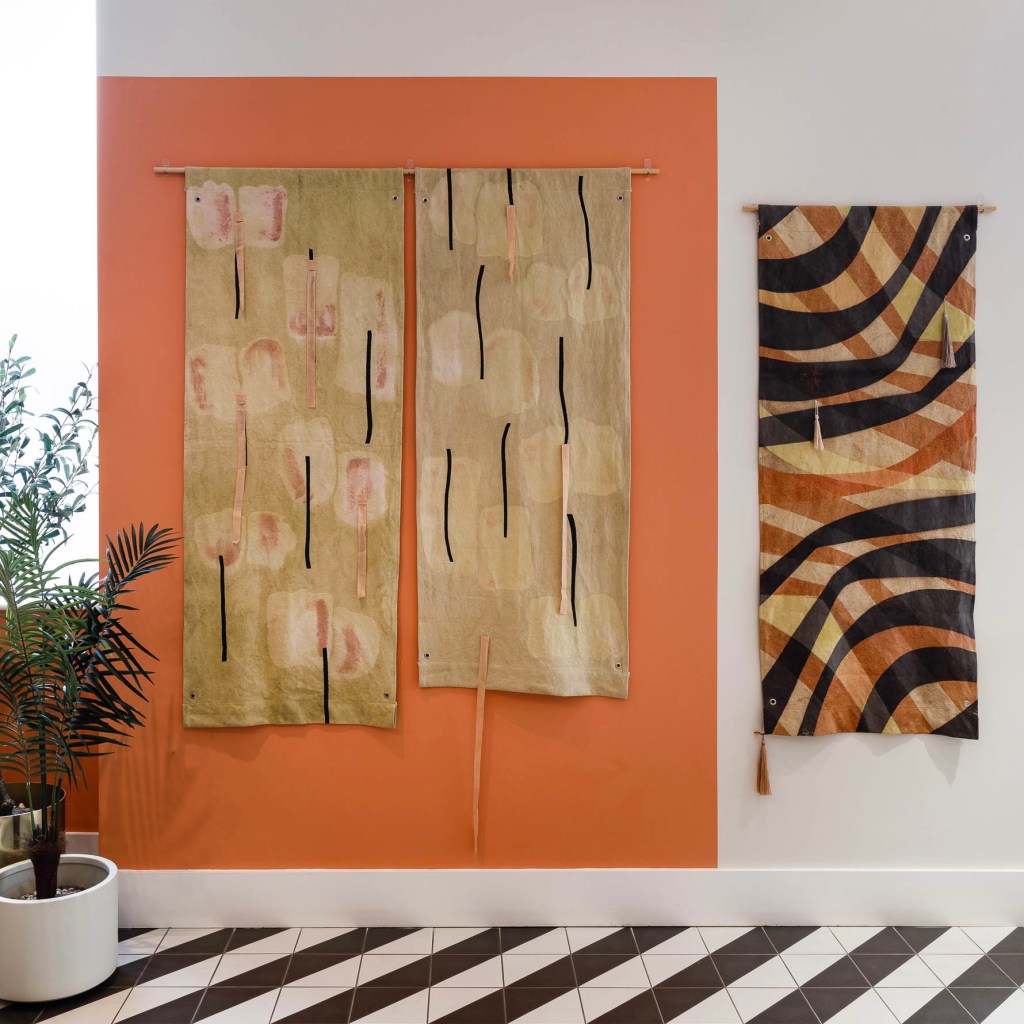
The printed banners in the Ceres studio, Brixton, prior to being waxed and installed above the streets of East London.

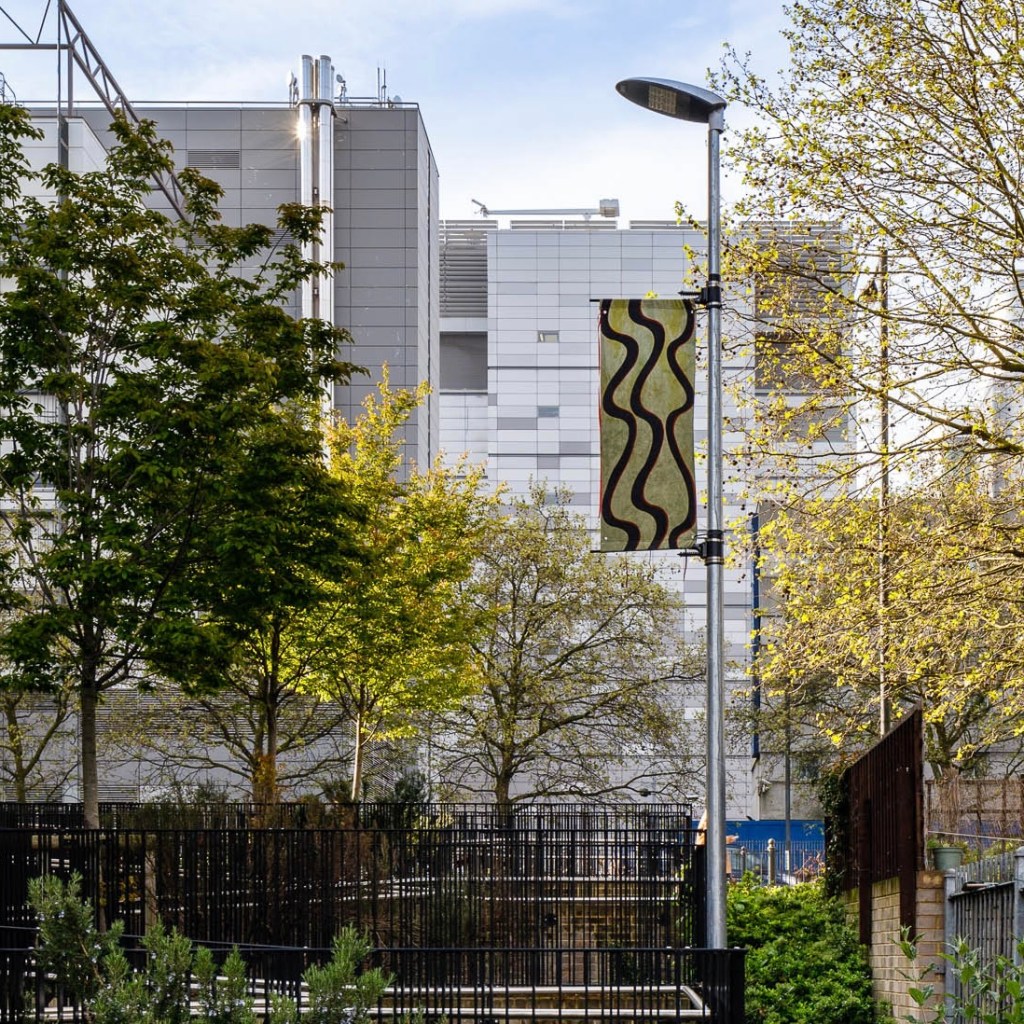
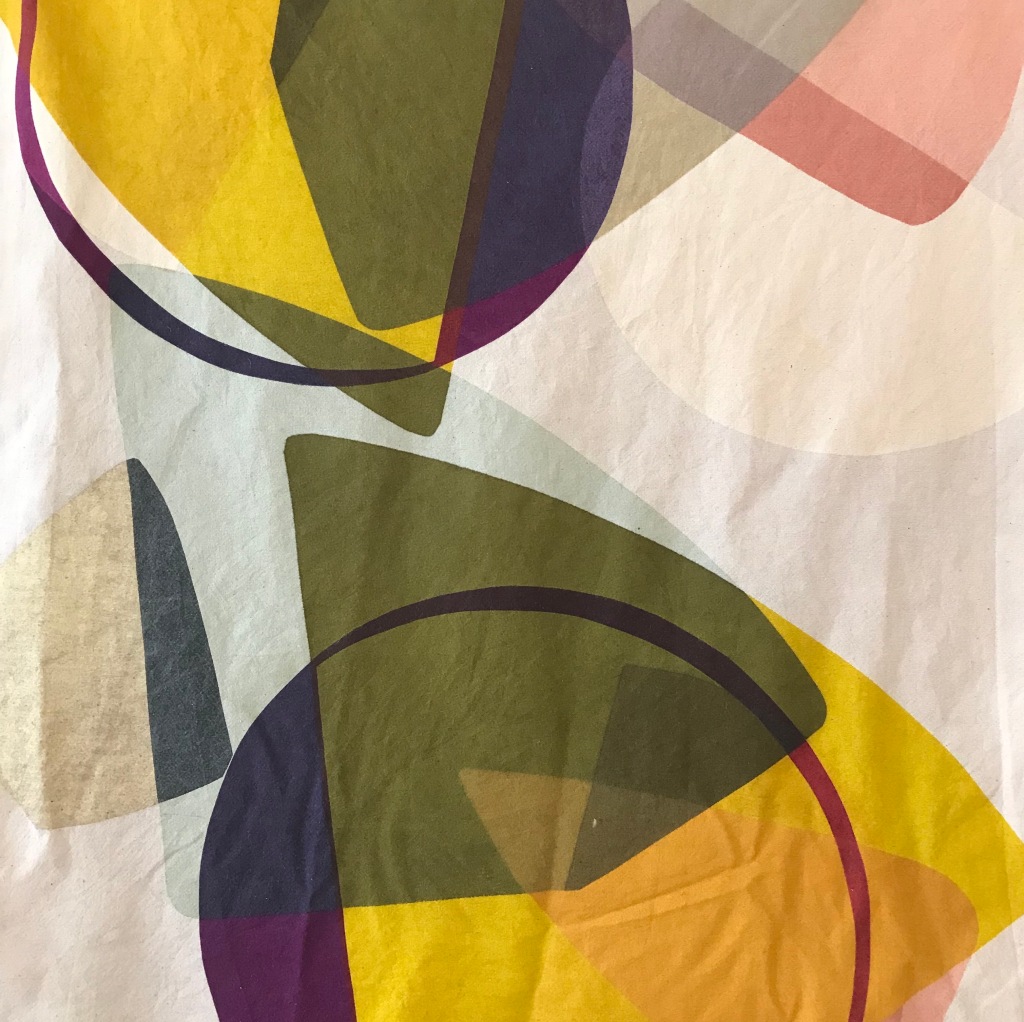
Ceres were invited by Company Place and Lola Lely to interpret artwork using natural dye-print. Ceres made these tiny flag designs, and translated them into huge hemp banners. Destined to float, flutter, and wave, above the streets of Poplar, East London.

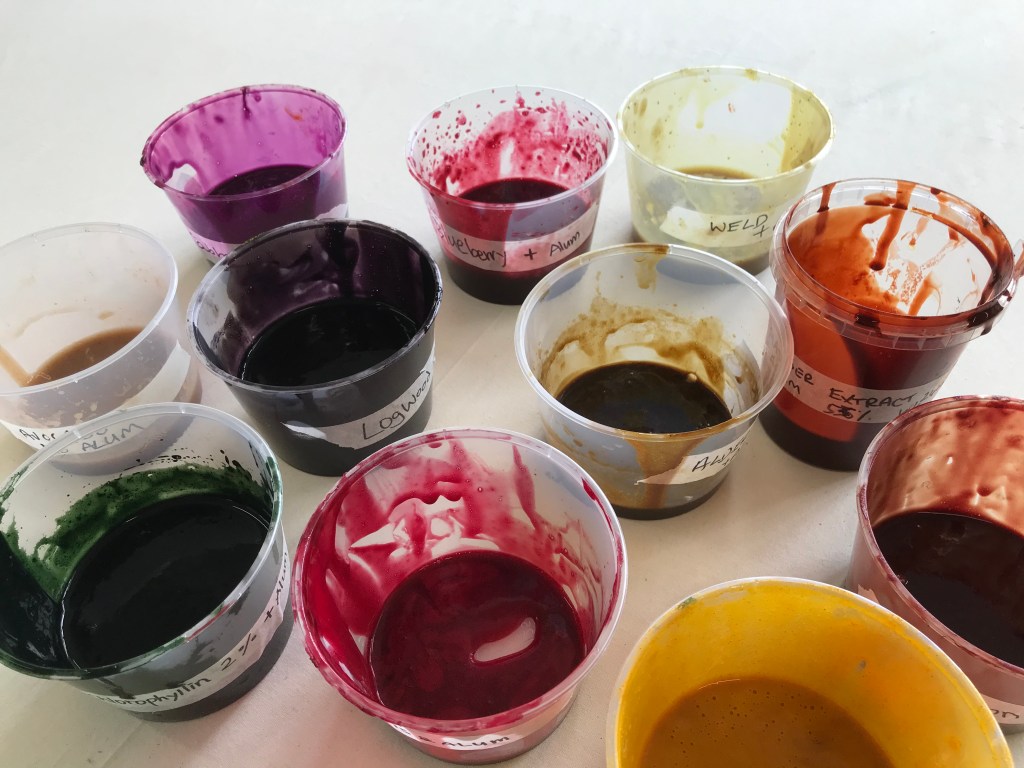
Ceres colours were in response to a palette initiated by community workshops in the Aberfeldy neighbourhood. We gathered dyes from bio-waste, and gardens in our locality; provenance of cafe’s and scrubland.

A unique public art installation, showcasing natural dyes on a large scale. These low environmental impact printing techniques, developed by Ceres, promote harmonious colours of the locality.

Most of the banners hung outside in Aberfeldy, braving the weather, and testing the endurance of natural dyes.

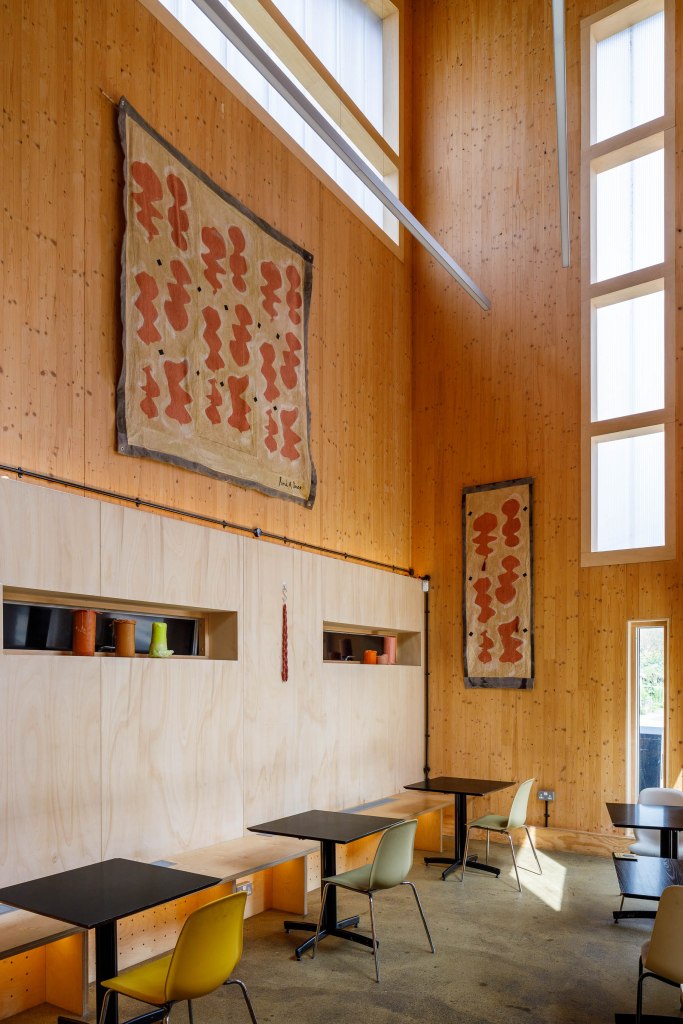
Some banners had a cushier existence, in the cafe at Poplar Works where the Colours of Home trail ended.

Hemp is a durable, robust and heavy. A logistical printing challenge, and a physical work out. Ceres tested methods, and researched new recipes to achieve a smorgasbord of colours and the rich black.

The banners were large. Six designs, six prints of each.

Beribboned and adorned, the banners spent Summer 2023 bringing colour and pattern to Aberfeldy Village, Poplar.

Symplocos sunbathing

At Ceres we often use Potassium Aluminium Sulphate (alum), as the mordant to increase colourfastness and lightfastness of natural dyes. A synthesised version of crystal chemically prised from rock and shale and prized by emperors, kings and popes. Ancient trades of empires long fallen, and secrets stolen in tall-ship heists. Pollution and corruption in the textiles industry already apparent a Millenia ago.

The Symplocos cochinchinensis tree accumulates aluminium from the soil, and fallen leaves become a rich source of alum. Use of this plant derived mordant helps protect the endangered forests of Indonesia and offers an alternative to chemical mordants. 

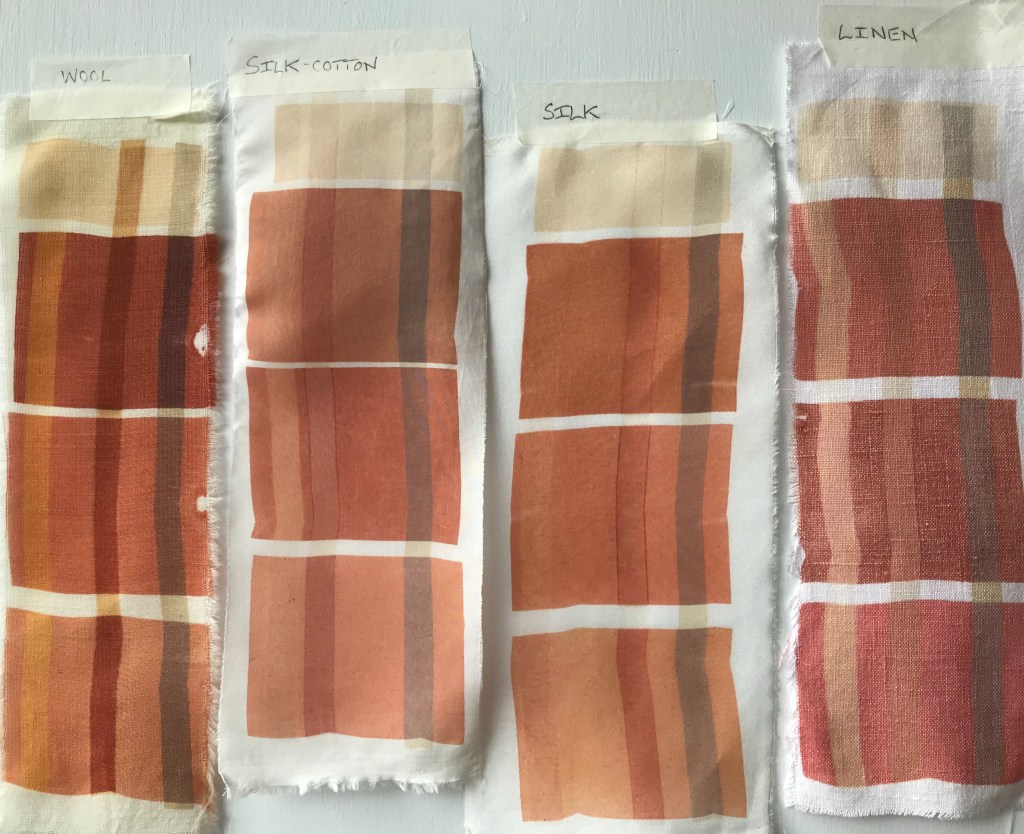
We did some tests to understand how well the symplocos alum performed alongside synthetic alum.

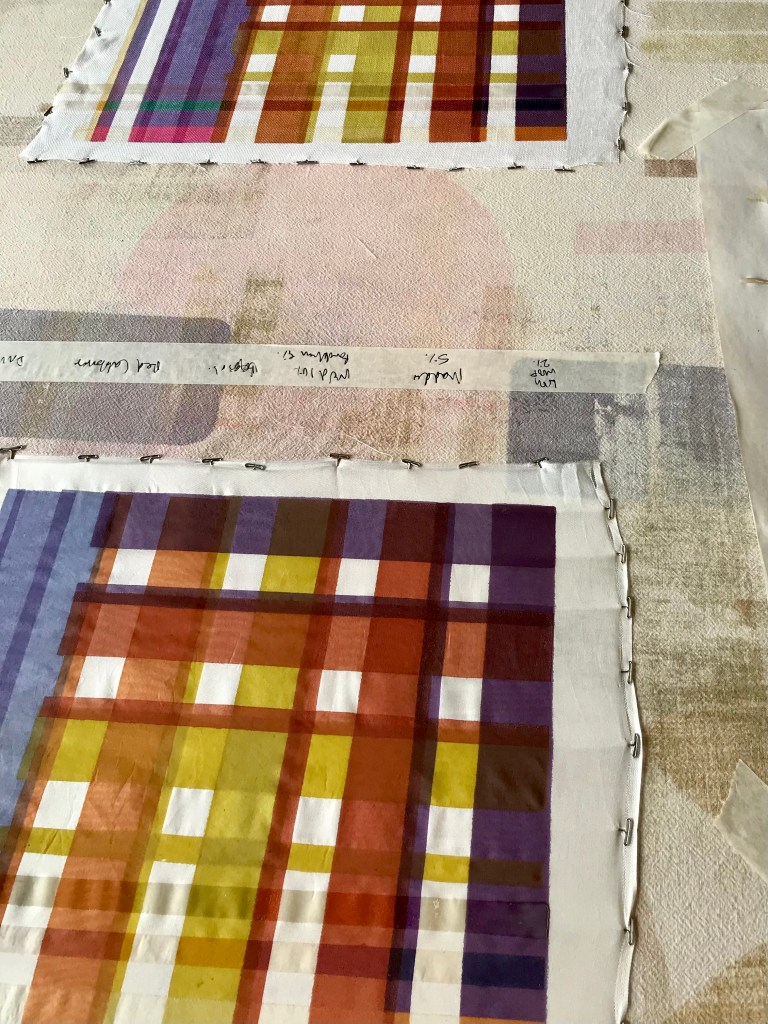
Printed pastes from top to bottom:

Symplocos

Madder and symplocos

Madder and alum and calcium carbonate

Madder and alum

Modifier stripes from left to right on each sample are citric acid, sodium carbonate, ferrous sulphate.

Symplocos is as wash-fast as alum, but it’s yellower base colour makes it better with the warmer colours.

A playground of colours

Colourfast or precarious-colour, the collecting and printing of local natural dyes as a contemplative study of beauty and change.

Organic calico

Pomegranate from Brixton market (Peru)

Iron-water from the garden

Printed using recycled cut-paper stencils

Buddleia and blackberries; flotsam of inner-city scrubland.

Damson and blackcurrants; sweet glut of friends allotment. 

Mulberries; abundantly sticky-dropping off festooned trees. 

Avocado, cabbage, pomegranate; the closing excess of market stalls.

Heritage of weld and madder; knowledge passed through centuries.

Experimental plants; harvests by myriad of artisan gardeners. 

Steamed to fix the dye.

Gently hand-washed, colour-transpose revealed.

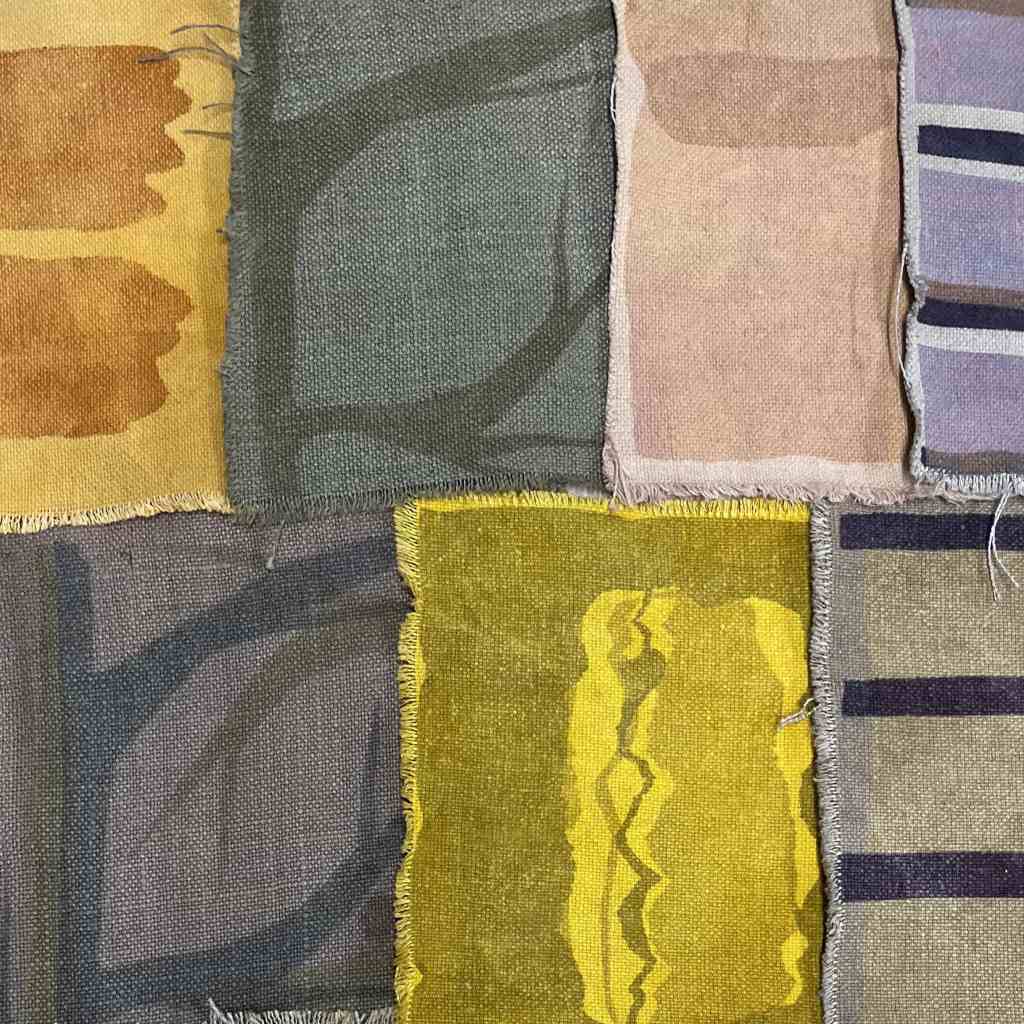
Weld, buckthorn, madder, pomegranate, iron, avocado, soda-ash, and citric, silk-screen printed on calico.

Buckthorn and cochineal; complementary and judicious use of imported dye. Rousingly singing accompaniment to the (gentler) locals.

Some colours gracefully slide from vivid to mute, others stay bold-vibrant. Design for change.

Local-global: blueprint for green print

Designing a Learning for sustainability workshop for Ceres and UAL students (module for MA in Academic Practice)

Strolling edge-boundaries of research into printed textiles sustainability. Discovering and acknowledging existing paths that intersect between problem and process.

Investigation of cultural identity, miles travelled by colour, appropriation of heritage patterns, or preservation of the craft. The field narrows, earth-horizon reached, honing to natural dye-print colours. A workshop that uses dyes as a vehicle to explore, discuss, and confront the complexity of sustainability in education. A workshop that assumes natural dyes are chosen over synthetic dyes because of design potential, availability, aesthetic beauty, or historical accuracy. The dichotomy of synthetic versus natural dye, a choice referenced but not focused on.

Observant of place-learning, the workshop invites students to explore their location; to forage, investigate dye gardens, or gather bio-waste To bring dye-plants to the workshop, and link learning to habitats. Colour palettes balanced by the suggestion of imported dyes alongside the indigenous and home produced. Personal concepts and perceptions of sustainability discussed and recorded onto hand-printed maps and digitally shared on Padlet.

Using the provenance of dye-plants to research colours within the context of sustainability. Knowledge of the origins of the dye enables students to study specific economic, social and environmental concerns. The collaborative making of colour-pastes in the workshop, printing of designs, visual documentation onto maps, and ensuing discussion embeds sustainability into practice.

A plethora of dye-stuffs were introduced during the workshops:

Madder from Nature’s rainbow in Hertfordshire.

Red onion skins from the Cambridgeshire, via the Twickenham farmers market.

Saffron from Spain. 

Bio-waste colours; cleverly feeding the population, then releasing colour before composing.

Imported dyes; some companies were transparent about their origins, some less knowledgeable. I had hoped for a country, a region, a farm, or a single field. Instead I’m told Europe. Insufficient information to allow accurate judgement of human rights, water management, or land husbandry.

Ancient colonial colours; exploited skeletons of trafficked slaves.

A workshop of collecting, fabricating, discussing, and reflection. Making informed influential  sustainable textile decisions. Printed maps, fabric samples, and digital interpretations are process snapshots, not scientific rationale. Work in flux. Setting sustainability horizons, but not boundaries. Participatory sharing of knowledge, creating a symbolic collaborative-cooperative-Commons product, that maps student’s sustainability thinking. Reach expanding.

Books and articles that particularly influenced this workshop were:

4 Plants of Bondage, Limbo Plants, and Liberation Flora: Diasporic Reflections for STS in Africa and Africa in STS by Geri Augusto.

Fibershed by Rebecca Burgess.

Wild Dress by Kate Fletcher.

Doughnut Economies by Kate Raworth.

Seeing with fresh eyes by Edward Tufte.

The studio in Brixton

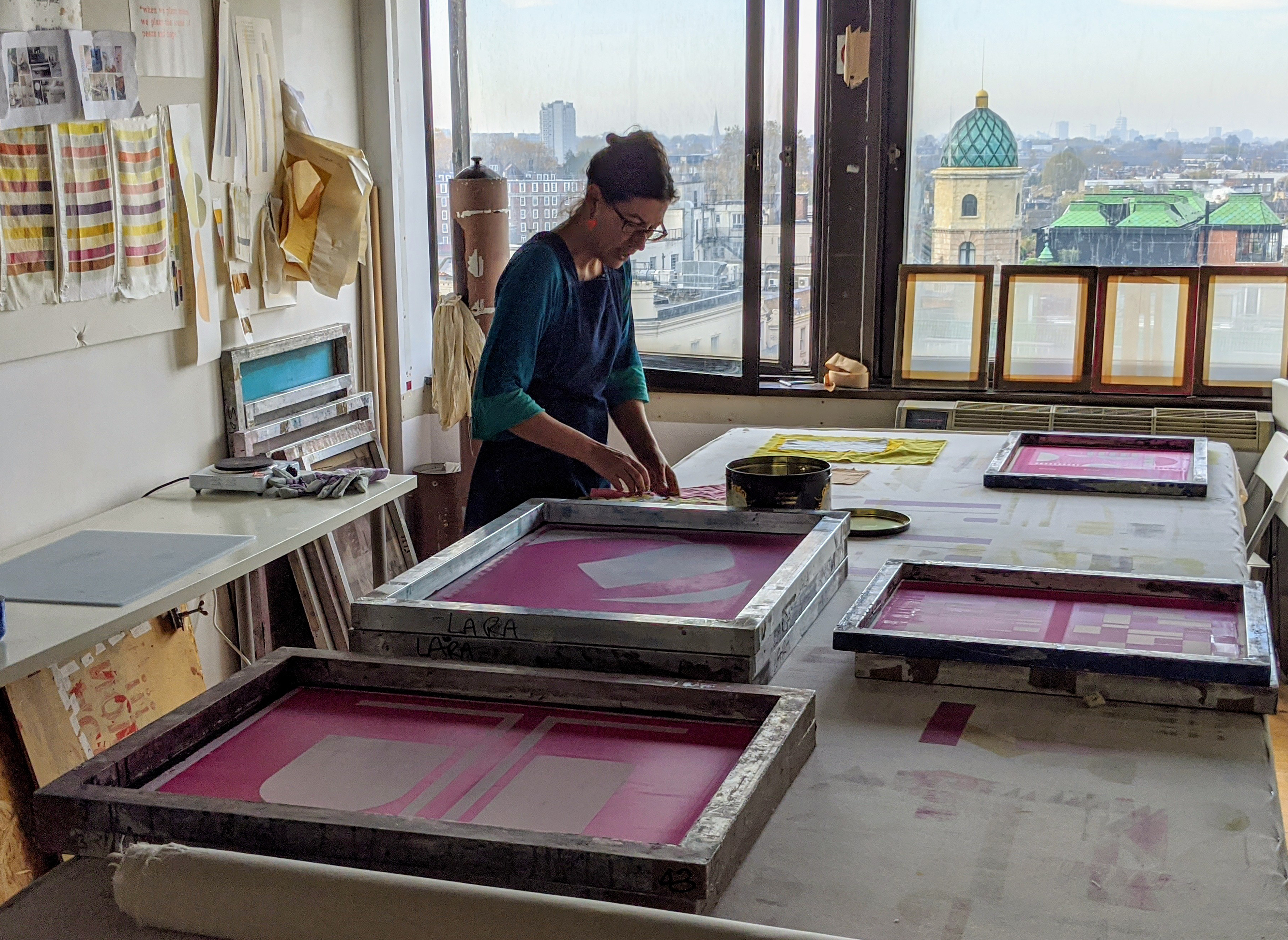
Ceres studio 1 is a contemporary natural dye print studio in London. It was established by Lara Mantell and Florence Hawkins as a collaborative venture to share knowledge and experimental work with natural dyes. The duo have individual yet complementary areas of expertise; Lara’s in textile design and natural dye printing onto fabrics, and Flo’s in printing with natural dyes on fabric and paper. This expertise and enthusiasm has led to their Brixton studio becoming a hub of colourful natural dye research and design projects.