Ceres were invited by TUMO, the Centre for creative technologies, to teach natural dye print in Yerevan, Armenia. The course focused on research and design, and culminated with an exhibition showing the students prototype scarves for the TUMO shop. We spent two weeks in this elegant and vibrant city.
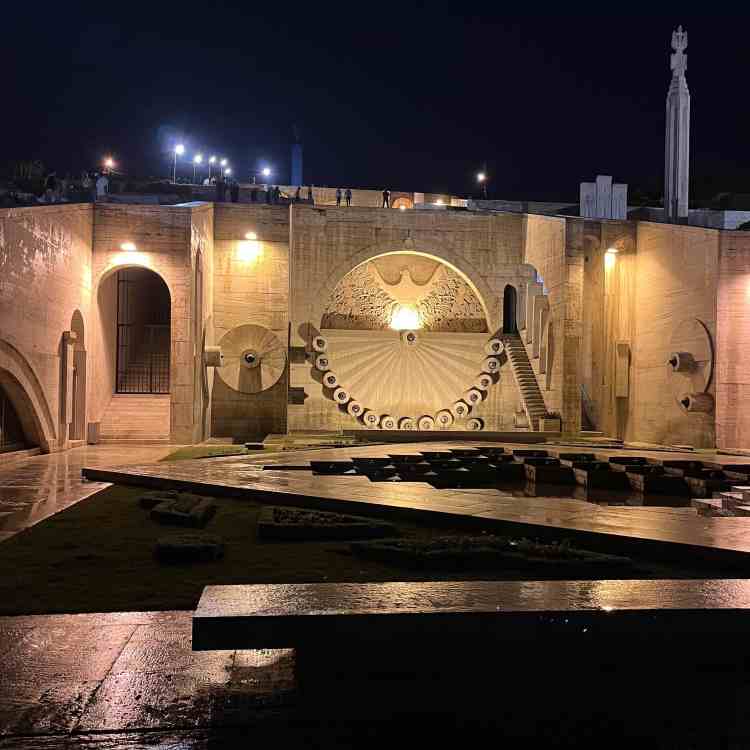
The plane’s descent was into a 4.00 am inkyness. Somnolent velvet-dark warmth, the Arrival’s hall perfumed by bouquets of flowers; greetings Armenian style. Yerevan has trapped itself a heatwave. Ravenous, we find the fridge abundant with berries, peaches, and cherries; already we love our flat mate Doretee. The fruit is juicy and sweet and aromatic.

TUMO is in an ornate 1910 building. The shop/gallery is on the ground floor, the interior has high ceilings, a grand-messed-up vibe, and a terrazzo staircase. Curious original features of Art-deco double fronted tiled fireplaces, hint of cold winters. Our studio was hot-like a furnace, with a promise of air-conditioning soon. Afternoon light made complex shadows on the yellow blinds. Flo and I adeptly create a print studio from the tables and work benches; finding solutions that enable our five students to make and design with natural print pastes.

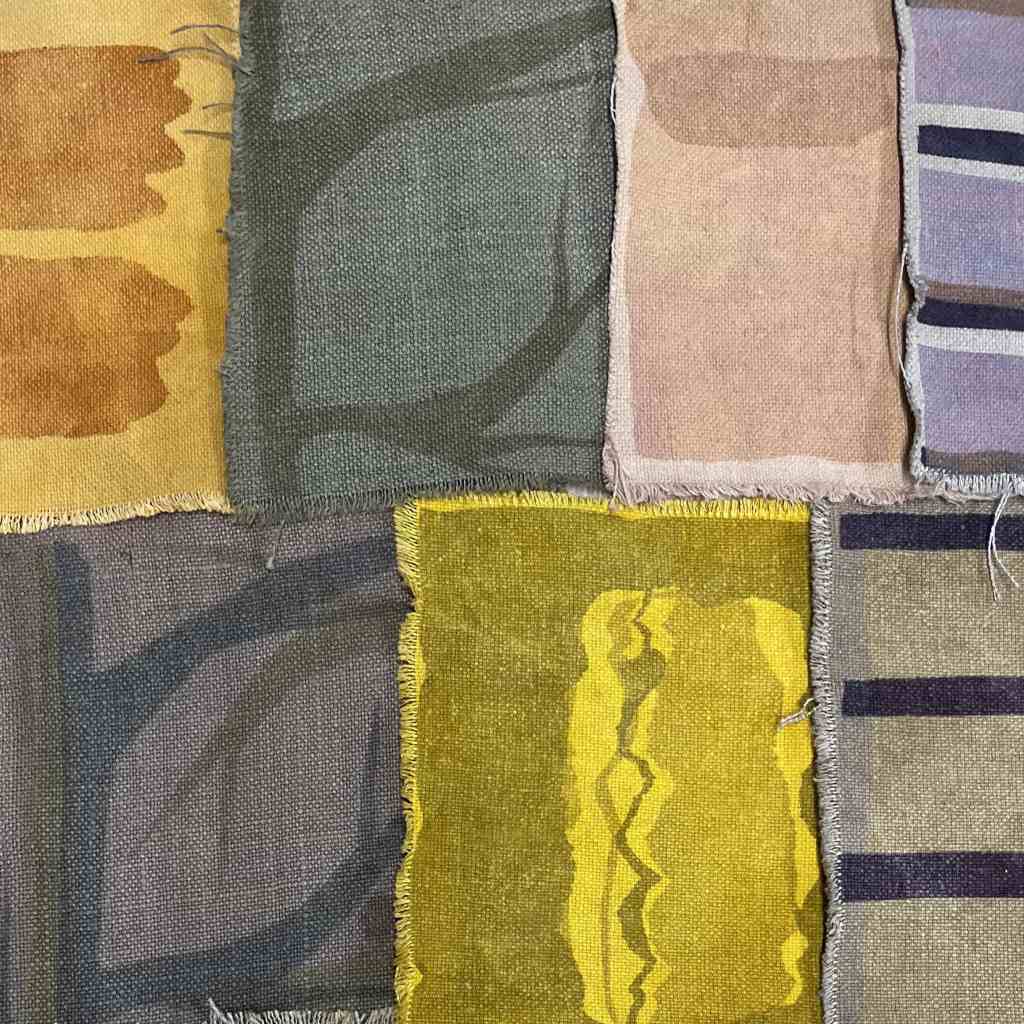
We took the students sketching at The National Gallery of Armenia; seven floors of marble-clad interior, and a trove of Armenian greats. The students showed us the quintisential Armenian painting by Martiros Saryan. A sublime-coloured depiction of the countryside, complete with dancing villagers, and mountains. Outside the museum it was underworld-hot. In TUMO’s newly air-conned studio’s we colour-fixed the sample stripes. They were disappointing; lacking vibrancy, depth, and variation in colour. Turning sleuths; we discovered a translation error for the mordant, a tiny word difference made a significant colour difference. Our co-conspirator in natural dyes, Dorothee, found balls of purest natural alum, and our colours were revived. We taught the students how to make cut-paper stencil designs, and they printed onto pomegranate/avocado dyed backgrounds. Flo and I started a collection of sample colour stripes for the studio, painterly-impressionist, as the newsprint degraded (we missed our tape from home).



 Ceres Studio 1